Short answer
Drug paraphernalia cleanup has no single national certification. What matters is bloodborne pathogen training for sharps, hazard communication and respiratory protection training for residue work, state contractor certification where methamphetamine rules apply, proof of insurance, a legitimate disposal route for sharps and drugs, and a written completion report. Verify which state and local requirements apply to your property before hiring.
Does a drug paraphernalia cleanup company need a license?
It depends on what the job involves and where you live. For a typical paraphernalia cleanup, such as removing syringes, pipes, foil, and residue from an apartment, a car, or a hotel room, most places do not issue one specific license. The company's qualifications come from its training, its safety programs, its disposal arrangements, and its records.
The picture changes when methamphetamine was manufactured on the property. A number of states regulate those sites, and some certify or license the contractors allowed to decontaminate them. A property that was only used for smoking or injecting drugs may fall outside those rules, while a former lab usually falls inside them.
Because these lines differ so much, ask the provider directly which rules it believes apply to your property and why. Your county health department can also tell you whether a job requires a certified contractor, so you do not have to assume either way.
It also helps to separate the company from the individual technician. A business may hold a state registration or contractor certification, while the people sent to your property each carry their own training records. Ask about both. A certified company that sends an untrained crew has not really met the standard you are paying for.
Sharps training
Syringes are part of many paraphernalia jobs, and they are the most immediate physical hazard. Technicians who may be exposed to blood or used needles should have bloodborne pathogen training under OSHA's standard, which covers disease transmission, protective equipment, safe work practices, and what to do after a needlestick.
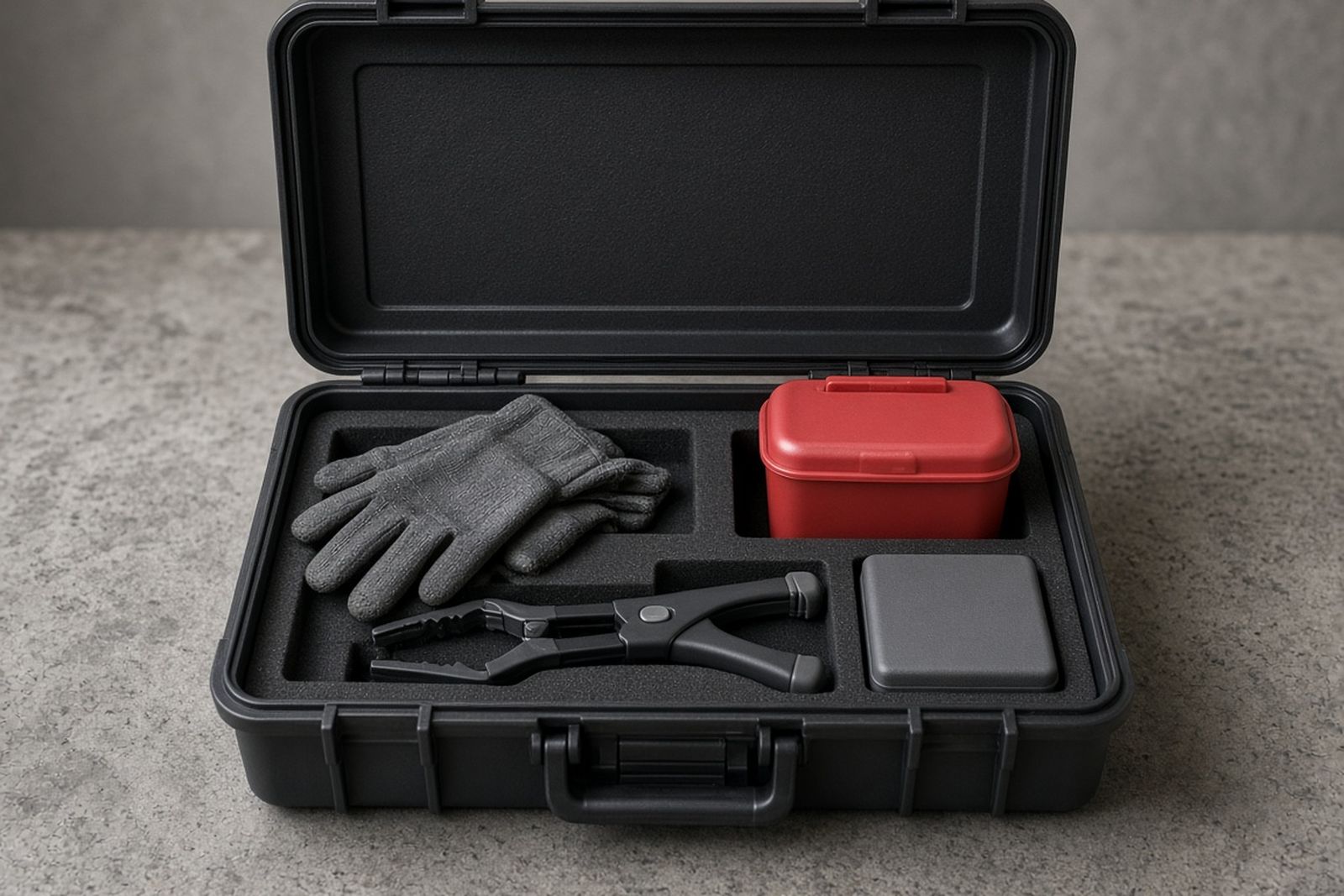
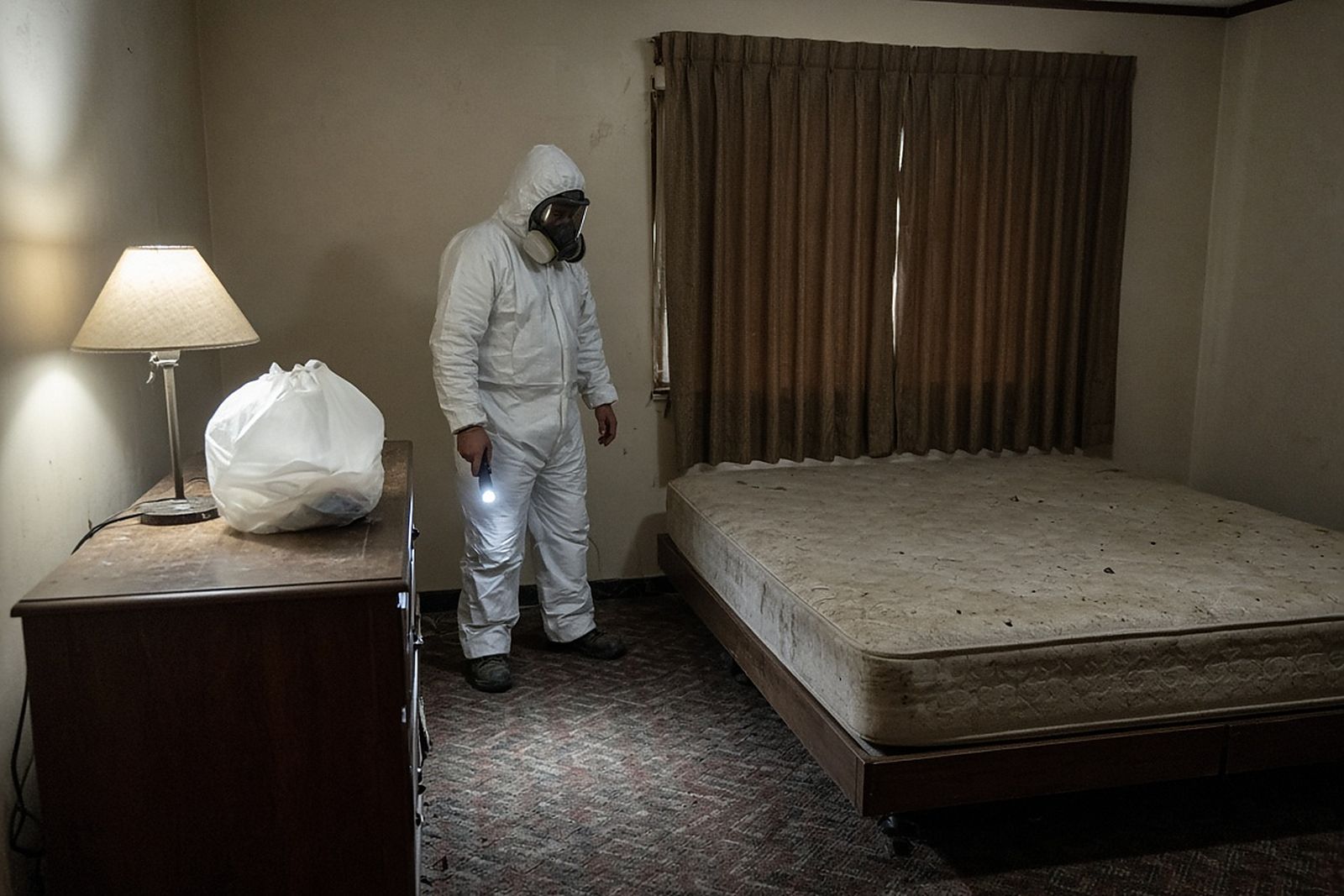
Look for practical skill as well as classroom time. Crews should know how to search mattresses, couch cushions, vents, and bathroom fixtures without reaching blindly into them. They should use grabbers or forceps and rigid sharps containers, never bare hands or trash bags.
Ask whether the company offers hepatitis B vaccination to its workers and has a written exposure control plan. These are basic parts of a bloodborne pathogen program, and a company that cannot describe them has not built one.
Needlestick response deserves its own question. Ask what a technician does in the first minutes after being stuck, who they report to, and how quickly they are seen by a medical provider. A crisp, confident answer suggests the plan has been practiced, not just written down.
Training for drug residue
Residue work calls for a different set of skills. Crews need hazard communication training so they understand the cleaning chemicals they use and the substances they may encounter. When respirators are required, the employer should run a respiratory protection program with medical evaluation and fit testing.
Hand hygiene and glove discipline are especially important. A 2020 NIOSH health hazard evaluation of drug-evidence laboratories found that 9 of 13 chemists had detectable fentanyl on their hands after a shift. Those were lab professionals handling seized drugs, not cleanup crews, but the finding shows how easily residue moves to skin when glove changes and handwashing are inconsistent.
Well-trained technicians change gloves between tasks, avoid touching their faces and phones during work, and wash hands before breaks. These habits sound simple, but they are exactly what training is meant to build.
- Hazard communication for cleaning products and suspected drugs.
- Respiratory protection program, when respirators are used.
- Glove selection, changing, and removal technique.
- Wet cleaning methods that avoid stirring powder into the air.
- Recognizing when a site may be a former lab rather than a use site.
Recognizing the signs of a former lab
One of the most valuable skills a paraphernalia crew can have is knowing when to stop. Signs of drug manufacturing, such as chemical containers, tubing, stained glassware, strong chemical odors, or blacked-out windows, suggest the property may be more than a use site.
If those signs appear, a responsible provider pauses and advises you to contact local authorities or a certified lab cleanup contractor. Continuing to clean could expose the crew to chemicals that require different protection, and it could complicate any legal cleanup process your state requires.
Ask how the company handles this situation. A thoughtful answer shows the crew understands the limits of its role and will not guess its way through a job that belongs to someone else.
When state guidance points to a professional
Some state agencies now offer guidance for residue in specific settings. Washington State's Department of Health, in a 2024 publication on drug residue in vehicles, advises hiring a decontamination contractor if fentanyl residue exceeds the ACGIH surface limit of 1 µg per 100 cm². Guidance like that shows how officials are thinking about thresholds, even where no binding cleanup law exists.
A qualified provider should be aware of any guidance that applies in your state and explain how it affects your job. It should also be clear about what its own work can show. Cleaning reduces residue; only sampling and lab analysis can measure what remains.
If a company claims to meet a state standard, ask which document it is referring to and request a copy or a link. Legitimate providers can point to the source.
Disposal arrangements
Paraphernalia jobs generate several kinds of waste, and each should have a proper route. Sharps belong in puncture-resistant containers sent to a licensed medical waste facility. Contaminated cleaning materials and debris may be handled as regular or special waste depending on local rules.
Leftover drugs are the most sensitive category. Some providers work with local law enforcement or drug take-back programs, while others advise the property owner on how to proceed. A company should never keep, sell, or casually discard drugs it finds.
Ask for the name of the medical waste hauler or facility the company uses, and ask how it handles any drugs found on site. If police are involved in the case, the provider should confirm the scene has been released before starting.
If the company transports its own sharps on public roads, it may also need state transporter registration and drivers trained under federal hazardous materials rules. Ask whether that applies, and if so, how the company meets it.
What a completion report should include
Documentation is where training and procedures become visible to you. A good completion report is specific enough that a future buyer, tenant, insurer, or family member could understand what was done without calling the company.
For rental properties especially, keep the report with your lease file. It can answer questions from a new tenant and demonstrate that you addressed the problem responsibly.
Ask whether reports are delivered electronically and how long the company keeps its own copies. If a question comes up a year later, a provider that archives its records can send a duplicate rather than leaving you to reconstruct the job from memory.
- Rooms and surfaces cleaned, with before-and-after photos.
- Number of sharps collected and how they were disposed of.
- Items removed, such as mattresses, carpet, or upholstered furniture.
- Cleaning products used and methods followed.
- Any sampling performed, who analyzed it, and the results.
- Notes on anything the crew could not address, with recommendations.
Two companies, one set of questions
Here is a made-up example. After their adult son moves into a recovery program, his parents need to clear the small house he rented from them. They find syringes, burned foil, pipes, and powder residue on a bedroom desk. They are exhausted and worried about doing the wrong thing.
The parents ask two companies the same questions. The first provides a summary of its bloodborne pathogen and respiratory protection training, names its medical waste hauler, explains how it would handle any drugs found, describes the signs of a former lab and what it would do if it saw them, and sends a sample completion report. It also mentions that surface sampling is optional and explains when it might be useful.
The second company says it is certified in biohazard work but cannot say by whom and offers no disposal details. The parents choose the first provider. When the work is done, they receive a report with photos and a sharps count. They feel able to rent the house again, and they have a record if their son or a future tenant ever asks what was done.
Private certificates and badges
Many cleanup companies display badges from training vendors or trade associations. Some of those programs are thorough, and a company that invests in them deserves some credit. Others are brief online courses with little hands-on content.
When a provider highlights a certificate, ask who issued it, what it covered, and whether it addressed sharps or drug residue specifically. Then return to the basics: training records, safety programs, disposal routes, insurance, and documentation.
The companies worth hiring are rarely offended by these questions. They know that you are trusting them with a difficult, private situation, and they expect to show you why that trust is justified.