Knowledge check with explanations

Drug Paraphernalia Cleanup quiz and study guide

Find out what you already understand, then read the parts you missed.

This quiz checks if you would make the right call when you open a door and find drug items inside. It is not a license exam, and it will not make you a trained worker. It is for the people who actually find these scenes first. That includes the property manager doing a move-out walk, the motel housekeeper, the fleet boss checking a returned van, and the code officer visiting an empty house. The questions focus on moments when a wrong reflex causes real harm. Examples are reaching for a baggie to see what is in it, sweeping powder off a counter, or calling a room ready because the trash is gone. If you miss a question, the note tells you why the safer answer is safer.

Get an email reply about drug paraphernalia cleanup

Send a short message to the follow-up inbox. A coordinator can reply by email. This form does not send emergency help; call 911 first if anyone is in danger.

Tell us what you need help with. Share a short description; please leave out medical details, access codes, and other sensitive information.

A request does not confirm a booking. For immediate danger, contact local emergency services.

Or email info@prompartybuses.com

Before you begin, skim the study guide below. It covers the six ideas the quiz keeps coming back to. How do you spot drug debris and the signs of something worse? Who has the right to go in, and when must a scene be released? How do you keep a hazard from spreading beyond one room? What does cleaning do and not do? Where are needles and soiled materials supposed to go? What paperwork proves the job was done? None of this replaces a trained company. It does give you enough words to ask a company sharp questions and to spot a shortcut when someone suggests one. Take the quiz once cold, read the guide, and take it again to see what changed.

Drug Paraphernalia Cleanup knowledge check

15 questions about real drug paraphernalia cleanup situations: staying safe, what happens, cost, choosing help and the rules. Every answer comes with a short explanation.

Why this quiz matters

Knowing these basics makes it easier to spot bad advice and ask a company the right questions. This quiz is educational — it does not certify anyone. After the quiz, review the explanations for questions you missed. For professional guidance on your specific situation, use the contact form at the top of the page for an email reply. Drug Paraphernalia Cleanup is classified as extreme-risk — every question here relates to real hazards where professional remediation is essential.

Progress1 / 15
SafetyQ1

During a move-out walk, you find a small baggie of white powder on the bathroom counter. What should you do?

Study guide: the six ideas behind the questions

Read these before or after the quiz. They cover the concepts every question draws on, written for drug paraphernalia cleanup specifically.

1Recognizing use debris and the signals that point to something worse

Drug debris includes glass pipes, blackened foil, cut straws, small baggies, cotton balls, bent spoons, lighters, and needles. You often find it near a bathroom, a mattress, or a car seat. These items point to drug use, and a professional sweep is usually the right response. Other signs point to making drugs. These include glass lab containers, tubing, chemical jugs, stained sinks or tubs, taped windows, and solvent smells. Those signs mean stop, leave, and call the authorities, because the hazards and cleanup rules change completely. Also watch for unknown powder anywhere. You cannot tell what a powder is by looking. So treat all of it as if it could be fentanyl or a similar drug. Never sniff, taste, or touch to test it, and never assume a small amount is harmless.

2Who may enter, who must be told, and when a scene is released

Finding drug items does not give you the right to do whatever you want. A landlord still owes notice to a tenant who has not given up the unit. A scene where someone was hurt or died belongs to police until they release it. Rules vary by state and county, so check with the local authority before you assume you can go ahead. Ask yourself three questions. Is anyone still living here? Has anything happened that police or a medical examiner would need to see untouched? Does my lease, my insurance policy, or a local law require me to report this? A serious company will ask the same questions before it sends a crew. It will say no to a scene that is still under investigation.

3Keeping the hazard in one place

Containment is the habit of not letting one bad room become a bad building. It starts with closing the door, but it goes further. Turn off a shared heating and cooling system or close its vents. That keeps any powder in the air from moving into hallways or nearby units. Staff should not carry items out to a dumpster or a shared trash room. Shoes, gloves, and tools that touched the space should not go on to the next unit. In a vehicle, containment means keeping the doors closed and not running the fan. Pros go further. They use air filters and plastic walls that keep dust inside the work area. They also set up clean zones where they change gloves and outer clothes. The goal is simple. The next person to walk through the building is not exposed to what happened in one room.

4Cleaning removes, disinfecting kills, and neither replaces the other

Cleaning means removing dirt, residue, and debris. It uses soap, water, wiping, and careful removal of soft materials. Disinfecting means using a product to kill germs. That matters when blood, vomit, or other body fluids are present, as at an overdose or where someone injected drugs. Drug residue is a chemical hazard, not a germ. So a disinfectant does nothing to remove it. Only cleaning and removing materials deal with it. On the other hand, a spotless-looking counter can still carry bloodborne germs where a needle was used. Good work does both in the right order. First remove the needles. Then wet-clean residue and dirt. Then disinfect surfaces that touched body fluids, and keep the disinfectant wet as long as its label says. Ozone machines, fogging, and air fresheners do not replace any of these steps.

5Where the waste goes

Different items leave the property in different ways. Used needles and lancets are sharps. They go into containers that points cannot poke through, and then to regulated medical waste treatment. Items soaked with blood or body fluids usually follow the same regulated path. Pipes, foil, and baggies are usually regular trash once they are empty. But a bag holding an unknown powder may need to be checked as hazardous waste. Nothing from a scene like this should go loose into a trash bag or dumpster where a trash worker could get stuck. Ask the company to explain each kind of waste before work starts. Ask for a written record of what left and where it went. Rules vary by state and county, so check the disposal route with the local authority.

6Proving the work was done

A clean-looking unit is not proof. Paperwork lets you show a tenant, buyer, insurer, or court that hazards were found, removed, and handled correctly. At the least, keep dated before and after photos. Keep a written list of every area searched and a photo list of items removed. Keep the names of products used on surfaces, and the disposal records. If testing was done, keep the form that tracks who handled the samples, and keep the lab report. If testing was advised but turned down, write down who turned it down and why. Checking the work is the second look. Walk through with the company. Do a second search of furniture gaps and closets. Make sure odors do not come back when the heating or cooling runs. Only then does the file support renting again, selling, or putting a vehicle back in service.
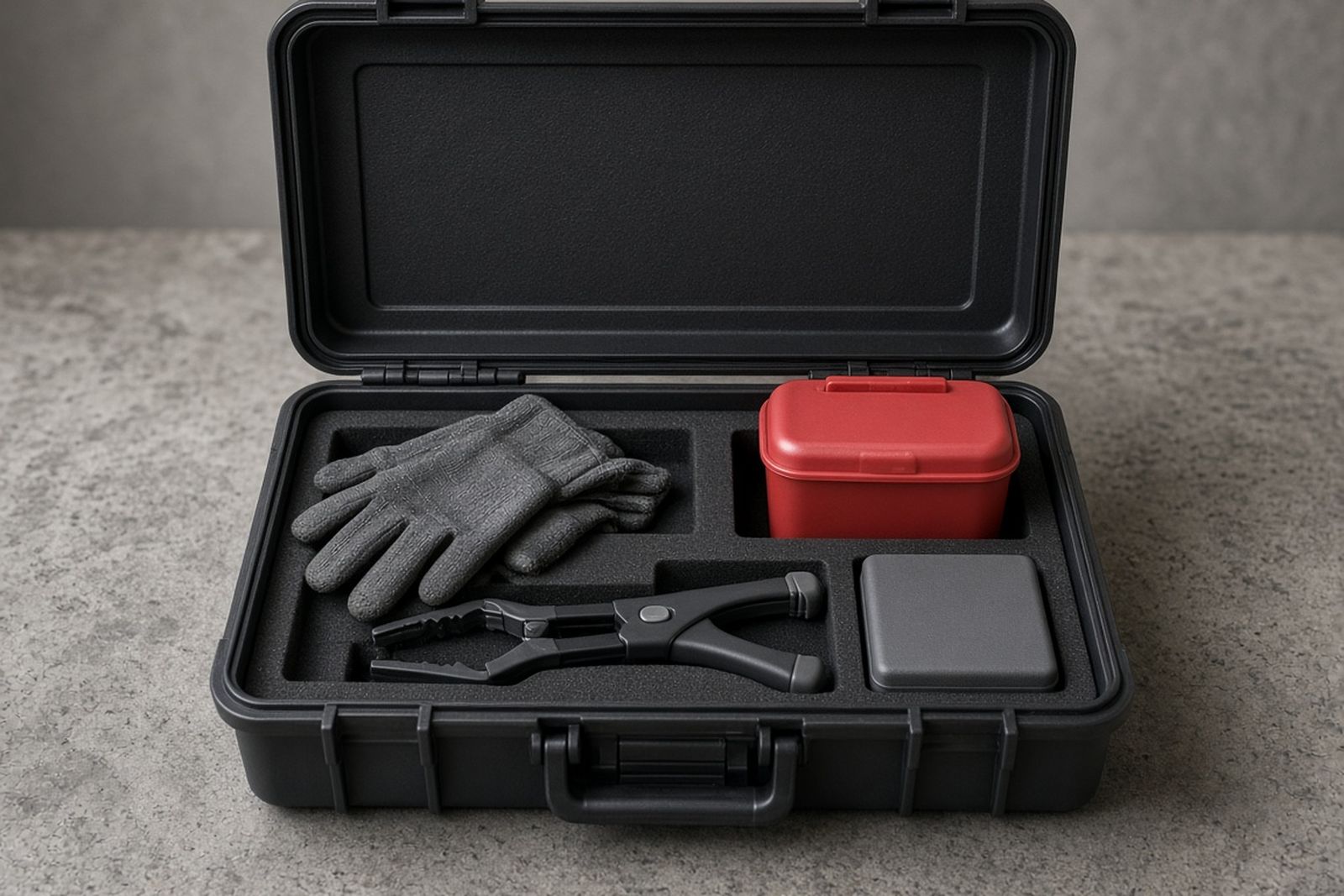
Open case holding puncture-resistant gloves, grabber tongs, a small sharps container and a kit
Illustrative photo, not a job record. Open case holding puncture-resistant gloves, grabber tongs, a small sharps container and a kit.

Drug Paraphernalia Cleanup facts the quiz draws on

14 minutes

Even if both palms were fully covered with fentanyl transdermal patches, it would take about 14 minutes to absorb 100 mcg, and patches take 3–13 hours to reach therapeutic blood levels.

Read with care: Illicit powders and analogs vary; the statement addresses brief incidental skin contact.

Source: American College of Medical Toxicology / American Academy of Clinical Toxicology (2017)Pharmacokinetic calculation based on 2.5 mcg/cm²/h patch absorption

0 of 25

Of 53 children referred to a UK hospital for community needlestick injuries between 1995 and 2003, none of the 25 who completed six-month testing were positive for HIV or hepatitis B or C.

Read with care: Small sample and less than half completed follow-up.

Source: Archives of Disease in Childhood (2005)Single UK pediatric center, August 1995–September 2003

42 days

Laboratory studies cited by the Canadian Paediatric Society found HIV surviving up to 42 days inside syringes, depending on temperature, while hepatitis B survives about one week.

Read with care: Virus survival in a syringe does not equal efficient transmission from a dry discarded needle.

Source: Canadian Paediatric Society (2018)Laboratory survival studies in syringes

1 bleach rinse

In laboratory tests, one rinse with household bleach eliminated hepatitis C infectivity in contaminated syringes, whereas rinsing with water or 5% ethanol was ineffective.

Read with care: Laboratory conditions; cleanup crews should dispose of sharps in containers rather than disinfect them.

Source: Open Forum Infectious Diseases (2015)Laboratory reporter-virus assay, insulin and tuberculin syringes

These figures are public research and agency data, not this network's own job records. Keep each number with its population, year and limits; none of them predicts cost, timing or outcome at a specific property.

Questions about the drug paraphernalia cleanup quiz

Is there a passing score I need to reach before I can clean a unit myself?

No, and a perfect score does not qualify you to handle needles or unknown powders. The quiz checks if you understand the risks and the order of steps. That helps you oversee a company and protect your staff. Actually handling needles and residue still belongs with trained people. They have the gear and the disposal routes to do it safely.

Does the quiz cover encampment-adjacent property?

Yes. One question deals with pipes and syringes that keep turning up along a fence next to an outdoor camp. The basics are the same as indoors. The focus is on spots where debris keeps coming back, on a no-touch rule that has staff report and photograph finds instead of picking them up, and on asking your city which office handles outdoor cleanup requests on public land.

Why are there questions about naloxone if I am not a medical worker?

Because the people who find drug items are sometimes the people who find a person in trouble. Anyone managing property where opioid use may happen should know the basics. They should know what naloxone is, where a kit might be kept, and that emergency services must still be called. The quiz stays at that level. It does not try to teach medical care.

Can I share the quiz with my maintenance team?

That is a good use of it. Have each team member take it alone. Then go over the questions everyone missed as a group. The gaps often show a step that is unclear, or a step that people skip when they are rushed. Examples are taking photos of a scene before touching anything, or reporting needles instead of picking them up.

What if a question seems to contradict my local rules?

Your local rules win. The quiz describes widely accepted safety practices. But reporting duties, disposal routes, and rules for moving back in vary by state and county. When something conflicts, check with the local authority or your company and follow their advice. Use the difference as a reminder to write the local rule into your own procedures.

Does the quiz address vehicles differently from buildings?

It includes vehicle cases, because cars, vans, and trucks come back from tenants, workers, and auctions with the same debris found in rooms. The questions focus on what is different in a vehicle. That includes hidden gaps under seats, how hard it is to air out a small space, and deciding if foam and fabric can be cleaned or should be replaced.

How does the quiz handle the line between use and manufacturing?

One question describes an empty rental with chemical jugs, tubing, a hot plate, and a solvent smell, and asks if it should be handled as a regular sweep. Other notes, such as the one on vehicles, point out when testing may be needed. The quiz stresses that passing a scene up means leaving and calling the authorities. It does not mean trying a deeper cleanup yourself. Getting that call right is one of the most important goals of the quiz.

What other visitors think

Poll results

Every count is a real visitor vote; nothing is seeded or padded. One vote per poll per device, and you can change your answer.

Your experience

You open a vacated rental and see foil, a pipe, and one syringe. What is your first move?

No visitor votes yet
Safety

Which hazard worries you most in a unit with drug debris?

No visitor votes yet