Drug Paraphernalia Cleanup planning tools
Work through cost, hiring, insurance, first steps and disposal at your own pace.
The tools on this page exist because the first hours after finding drug debris are confusing. Most people have no plan to fall back on. Each tool takes one choice you face and breaks it into questions you can actually answer. What did you find? Who is in the building? Is the scene released? Is there a smell? Are there needles? Is it a rental? From your answers, it gives you a list of steps, a range, a category, or a score. None of it needs special knowledge. The tools are built around the cases this site covers. So a fleet manager checking a returned vehicle and a landlord staring at a foreclosed kitchen both get advice that fits, not general advice written for a hospital.
Get an email reply about drug paraphernalia cleanup
Send a short message to the follow-up inbox. A coordinator can reply by email. This form does not send emergency help; call 911 first if anyone is in danger.
Choose a tool
Every tool runs in your browser. Nothing you enter is stored on our servers, and no tool replaces an on-site assessment, a written scope or your insurer's decision.

Cost Range Estimator
Set the affected area, surface types, severity and extras to see an educational cost range and the factors that move it.
Open tool
Provider Vetting Checklist
Fifteen questions to ask any remediation provider, a readiness score, and a copyable list of what is still unanswered.
Open tool
Insurance Claim Organizer
A guided checklist from finding the policy to tracking the carrier decision, with a printable summary of where the claim stands.
Open tool
First 24 Hours Planner
Tell the planner a few facts about the situation and get an ordered list of who to call, what not to touch, and what to photograph.
Open tool
Waste & Disposal Classifier
Five questions about the material point to the likely waste category and which authority to confirm the rules with.
Open tool
DIY or Call a Pro? Risk Check
Eight yes-or-no questions that produce a risk level and explain when professional help is the safer choice.
Open toolKnowledge quiz
A knowledge check with explanations and a study guide covering hazards, containment, disinfection, waste and documentation.
Take the quizHow these tools fit drug paraphernalia cleanup
Think of the set as a sequence. The First Twenty-Four Hours Planner tells you what to do and not do right now. That includes when a police call comes before a cleanup call. The DIY or Call a Pro check helps you decide if the job is small enough for a sharps container and gloves. Or it may show that unknown powder and hidden needles make that a bad idea. The Waste and Disposal Classifier sorts what you see into the likely kind of waste. The Cost Range Estimator and the Provider Vetting Checklist help you ask for and compare quotes. The Insurance Claim Organizer helps you build a file if a policy might pay. You can use one or all of them, in any order.
The tools have real limits, and it is better to say so plainly. They cannot see your property, identify a powder, or tell you if your county requires a report. They give results for learning, based only on what you enter. They do not replace an on-site review by a qualified company or a talk with the local authority. A cost range is a planning aid, not a quote. A waste category is a starting point for a question, not a legal ruling. A readiness score reflects what you confirmed with a company, not how skilled the company really is. Use the tools to sort out your thinking and your questions. Then check every conclusion with someone who can stand in the room.

Drug Paraphernalia Cleanup numbers worth knowing before you plan
Walking into a unit that smells wrong, with foil on the counter, sets off two pulls. One says clean it fast so you can rent it again. The other says panic. Neither helps you. The figures below are meant to give you calmer footing. They show how often property managers find this kind of debris. They show what drives the price of a professional sweep. They also share what public health agencies say about accidental contact with needles and fentanyl-type residue. Read them as background, not a verdict on your building. Every property is different. The right move depends on what was found, who might have been exposed, and whether local rules say you must report it before anyone starts cleaning.
- 1 bleach rinse
In laboratory tests, one rinse with household bleach eliminated hepatitis C infectivity in contaminated syringes, whereas rinsing with water or 5% ethanol was ineffective.
Read with care: Laboratory conditions; cleanup crews should dispose of sharps in containers rather than disinfect them.
Source: Open Forum Infectious Diseases (2015)Laboratory reporter-virus assay, insulin and tuberculin syringes
- 3 steps
CDC defines sanitizing as reducing germs on surfaces to levels considered safe and disinfecting as killing remaining germs, with cleaning always performed first.
Read with care: CDC's consumer fact sheet does not state the 99.9% or 99.999% log-reduction figures often quoted; those come from EPA product testing standards.
Source: CDC (2023)United States, household surfaces, CDC consumer fact sheet
- 24–48 hours
EPA advises drying water-damaged areas and items within 24 to 48 hours to prevent mold growth.
Read with care: The window is shorter in warm, humid conditions.
Source: US EPA (2026)Residential guidance, United States
- 34,625
Federal OSHA conducted 34,625 inspections in fiscal 2024, split between 17,455 unprogrammed and 17,170 programmed inspections.
Read with care: Excludes inspections by the 22 state plans covering private employers.
Source: OSHA (2024)United States federal OSHA, FY2024
These figures are public research and agency data, not this network's own job records. Keep each number with its population, year and limits; none of them predicts cost, timing or outcome at a specific property.
What other visitors decided
Every count is a real visitor vote; nothing is seeded or padded. One vote per poll per device, and you can change your answer.
You open a vacated rental and see foil, a pipe, and one syringe. What is your first move?
Which hazard worries you most in a unit with drug debris?
Questions about the drug paraphernalia cleanup tools
Which tool should I open first if I just found paraphernalia?
Start with the First Twenty-Four Hours Planner. It asks about the facts that matter most right away. Is anyone still in the unit? Do you see needles or powder? Might the scene need a police call? Then it gives you a list of steps to take and things to avoid, in order. The other tools make more sense once things are stable.
Do the tools store what I enter about my property?
The tools run in your browser and give a result you can copy or print. Do not type addresses, tenant names, or other details that identify anyone into any field. The results are meant to help you plan and talk with companies. They are not meant to be a record of a specific event. Keep event records in your own property files.
Can the cost tool tell me whether sampling will be needed?
It can show testing and lab work as a possible cost driver. But it cannot decide if your unit needs it. That depends on what a company sees on site, such as chemical stains or signs of drug making. It also depends on who will live in the space next. Use the tool to make sure testing comes up in every quote you ask for.
Are the tools useful for a vehicle rather than a building?
Yes. Several tools ask about the setting, and the advice changes for a vehicle. The area is smaller. There are hidden gaps under seats and in door panels. Airflow is limited. And there is the question of whether seat covers and foam can be cleaned or should be replaced. The disposal and company-vetting tools work for vehicles without any change.
What does the DIY tool consider a deal-breaker?
Some things push the result firmly toward hiring a pro. These include any unknown powder you can see, any needle when you cannot tell how many more there are, and any sign of drug making. Any body fluids count too. So does anyone living there who is a child or has health problems. The tool explains why each factor matters, so you see the reasons and not just the verdict.
Can I use the vetting checklist for a junk-removal or general cleaning company?
You can, and the result will usually tell you a lot. The checklist asks about training for handling blood, needle handling, and wet cleaning methods that are safe around fentanyl. It asks about waste shipping records and what the company does if it suspects a drug lab. A general hauler who cannot confirm those items is not the right fit for a scene with drug items, no matter how good it is at trash-outs.
Do the tools reflect my state's laws?
No. They describe common practice and point out where local rules usually apply. Examples are reporting, disposal, and moving back in after suspected drug making. Rules vary by state and county, so check with the local authority before you act on any result. The tools are built to point you to the right question. They do not answer it for where you live.
More on drug paraphernalia cleanup
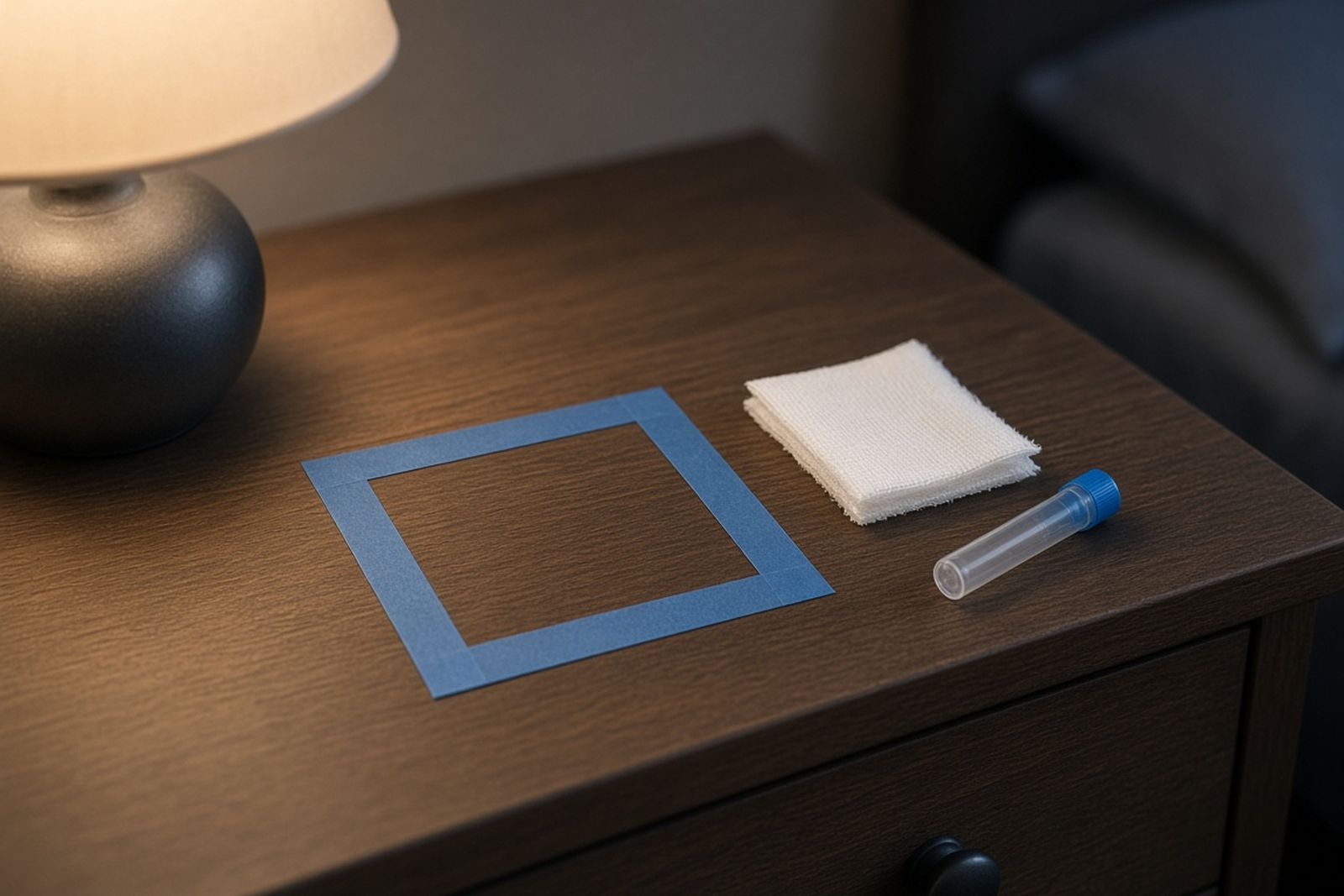
Drug Paraphernalia Cleanup services
See how needle pickup, residue cleaning, vehicle work, and turnover paperwork fit together, and what to expect from a company on site.
Costs explained
What drives the price, published cost ranges, and how to read a written quote line by line.
Insurance and payment
Which policies may respond, how to document a claim, and what to do if coverage is denied.
Community polls
Compare your gut calls with other owners and managers on police reports, what to tell tenants, who pays, and when lab testing is worth it.
Knowledge quiz
Test whether you would make the safer call when you find foil, pipes, syringes, or unknown powder, then review the study guide.
Articles and resources
Read longer articles on getting a unit ready after drug use, safe cleaning when fentanyl may be present, and how to tell drug use from drug making.