Drug Paraphernalia Cleanup: Process & What to Expect
Property-specific walkthroughs for drug paraphernalia cleanup: assessment, scope approval, hazard controls, material decisions, documentation, verification, and restoration handoff. Not every phase applies to every incident.
Posts in this group walk through a drug debris cleanup from the first call to the turnover report. You will read how a worker looks over a unit or vehicle. You will learn why the search starts with needles before any general hauling, and how powders are wetted and wiped instead of swept. You will see how soft items such as mattresses and couches are judged. Other posts cover what to do in the hours before a crew arrives. They explain how long a typical sweep may take, depending on clutter. They also cover what happens when a worker finds something that calls for lab testing.
Get an email reply about drug paraphernalia cleanup
Send a short message to the follow-up inbox. A coordinator can reply by email. This form does not send emergency help; call 911 first if anyone is in danger.
Knowing the order of work helps because you may be asked to decide things fast. A crew might ask if it should throw out a sofa with needles inside its frame. It might ask if it should pause for police, or if it should advise surface testing before new tenants move in. It helps to know why needles come first, why unknown powders are never handled dry, and why painting waits for cleaning. Then you can respond with confidence instead of reacting under pressure. It also helps you plan around the work. For example, you can arrange access to a locked storage closet. Or you can tell neighbors that a crew in safety gear is there for routine safety reasons.
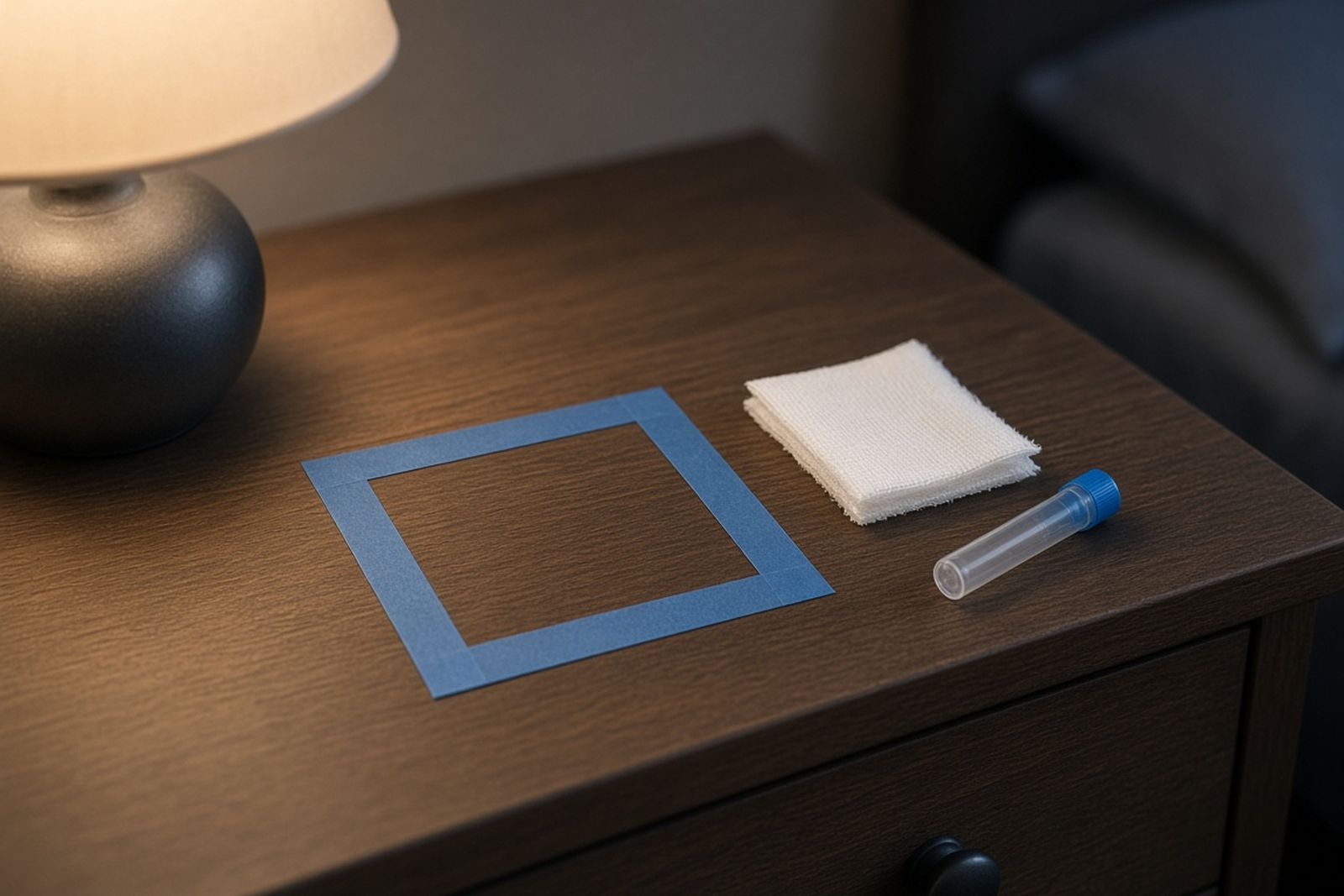
What to Expect During Professional Drug Paraphernalia Cleanup
What happens when a crew arrives to clear pipes, foil, syringes, and residue? A step-by-step look at assessment, search, packaging, cleaning, and sign-off.
A professional drug paraphernalia cleanup usually follows a clear sequence: a walkthrough and scope, protective setup, a methodical room-by-room search, safe packaging of sharps and debris, cleaning of affected surfaces, optional residue testing, and a final walkthrough with documentation. You mostly stay out of the work area. Expect questions about what was found, who had access, and whether anything needs to be preserved.
How Long Does Drug Paraphernalia Cleanup Take?
From a single shoebox of syringes to a whole unit with residue in the carpet, here is what stretches or shortens a drug paraphernalia cleanup timeline.
How long drug paraphernalia cleanup takes depends on the size of the search area, how many items are hidden, whether residue has soaked into soft materials, and whether testing is needed afterward. A small, contained find can be finished in a single visit. A heavily used home with residue, blood, and clutter can take several visits spread across days, plus lab turnaround time.
Urgent Drug Paraphernalia Cleanup: What to Do Before a Provider Arrives
Just opened a door to foil, pipes, syringes, or powder? Here is what to do in the first hour to protect people, preserve the scene, and prepare for a crew.
If you discover drug paraphernalia, step back and close the door, keep people and pets out, and do not touch, sniff, or move anything. Call 911 if anyone is unresponsive or struggling to breathe, and follow police instructions if a crime is suspected. Then photograph from the doorway, note who had access, shut off shared ventilation if you can, and call a cleanup provider with specific details.
Sourced figures on process & what to expect
- 2.4–4 million
CDC estimates 2.4 to 4 million Americans had hepatitis C in 2017–2020, and only 4,966 of an estimated 69,000 acute infections were reported in 2023.
Read with care: Injection drug use is the leading transmission route, but the estimate covers all causes.
Source: CDC (2025)United States
- 100x morphine; 0.2–2.0 µm
EPA describes fentanyl as roughly 100 times stronger than morphine, with particles of 0.2–2.0 microns that become airborne easily.
Read with care: Potency figures vary by source and analog.
Source: US EPA (2021)Federal cleanup guidance
- 0.54
Wall-wipe concentrations ranged from 0.54 to 110 micrograms per 100 square centimetres.
Read with care: One property; no general prevalence or current clearance threshold inferred.
Source: Wright et al. (2019)One Australian home with suspected former manufacture, sampled more than five years later.
These figures are public research and agency data, not this network's own job records. Keep each number with its population, year and limits; none of them predicts cost, timing or outcome at a specific property.
What research has found
Findings from published studies of people and properties in situations like this one. They describe what researchers observed in a specific group; they are not predictions for your case.
Commercial sorption tubes and laboratory methods successfully measured airborne methamphetamine.
Methamphetamine was detected within a mattress, not only on its exterior.
Process & What to Expect: common questions
How does a crew search a unit for hidden needles?
Workers go room by room in a set pattern. They check gaps in furniture, under cushions, behind toilets, inside vents, in drop ceilings, and along baseboards. They use tools, not hands. They put items straight into containers that needles cannot poke through. Cluttered units take longer, because each pile must be checked before it is bagged or moved.
What happens if the crew finds signs of drug manufacturing?
A careful company stops work, keeps people out, and explains that the job has changed. Depending on what was found, the next step may be calling police or a hazmat team. It may also mean arranging surface testing through an accredited lab. Cleanup then follows a chemical cleanup plan instead of a standard turnover.
What should a landlord receive at the end of a paraphernalia cleanup?
Ask for before and after photos of each room. Ask for a list of where needles and other items were found. Ask for a note on what was cleaned and any items thrown out, and where the needle containers went. If testing was done, ask for the lab report. That packet backs up your records before new tenants move in.
What decisions will I likely be asked to make during a paraphernalia cleanup?
Expect a few quick calls. Should soft items where needles or blood were found be thrown out? Should the crew add rooms if the search grows? Should it pause for police if it finds more than personal use would explain? Should it add surface testing? Decide ahead of time who can approve each of these, and roughly what you would choose. That keeps the crew from waiting and keeps you from deciding under pressure.
Do I need to be reachable by phone for the whole job?
Ideally, yes, or name someone who can decide for you. Crews often need quick answers. They may find more than expected, want to throw out something you might value, or need access to a locked area. A delay in reaching you can stall the work. If you will be away, give the company written instructions for common choices. Also name a backup contact who has the authority to approve changes.
Is it normal for the plan to change after the crew starts?
Yes, within limits. Hidden items often surface once drawers, closets, and furniture are searched, and residue or stains may reach beyond what was visible from the doorway. A good provider pauses, explains what it found, and gets your approval before expanding the scope or cost. What should not change without discussion is the method, such as switching from wet wiping to dry sweeping to save time.
What happens to keys and access codes after the cleanup?
Agree on this before work begins. Many providers return keys at the final walkthrough or leave them in a lockbox you control. If you shared a door code, change it afterward as a routine precaution, and note who had access and when in your file. For rentals, this is also a sensible moment to rekey if a former occupant may still hold a copy.
Related community polls
Every count is a real visitor vote; nothing is seeded or padded. One vote per poll per device, and you can change your answer.
You open a vacated rental and see foil, a pipe, and one syringe. What is your first move?
Which hazard worries you most in a unit with drug debris?
More on drug paraphernalia cleanup
Drug Paraphernalia Cleanup services
See how needle pickup, residue cleaning, vehicle work, and turnover paperwork fit together, and what to expect from a company on site.
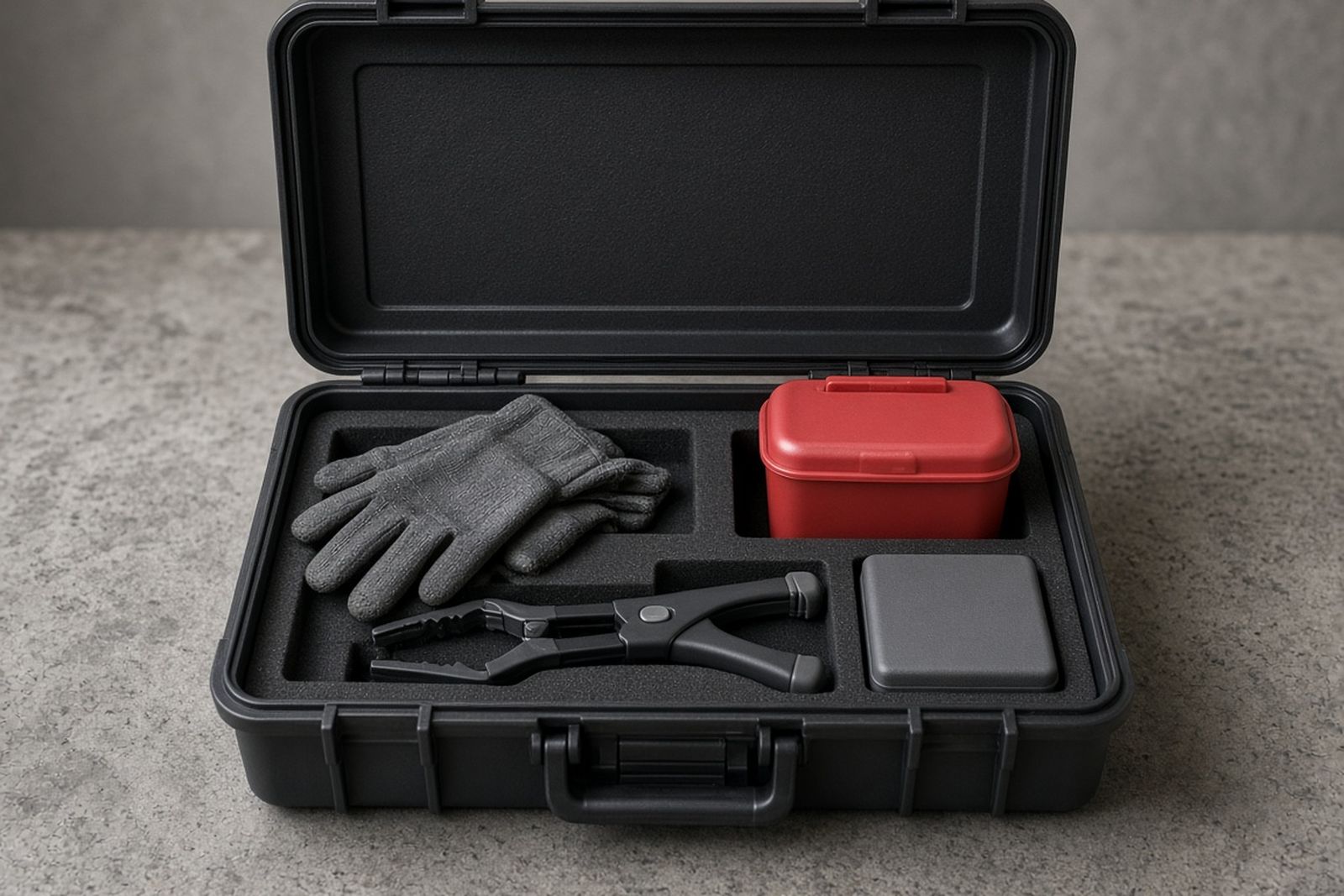
Costs explained
What drives the price, published cost ranges, and how to read a written quote line by line.
Insurance and payment
Which policies may respond, how to document a claim, and what to do if coverage is denied.
Planning tools
Work through planners, classifiers, and checklists built for rentals, motels, vehicles, and vacant homes where drug debris has been found.
Community polls
Compare your gut calls with other owners and managers on police reports, what to tell tenants, who pays, and when lab testing is worth it.
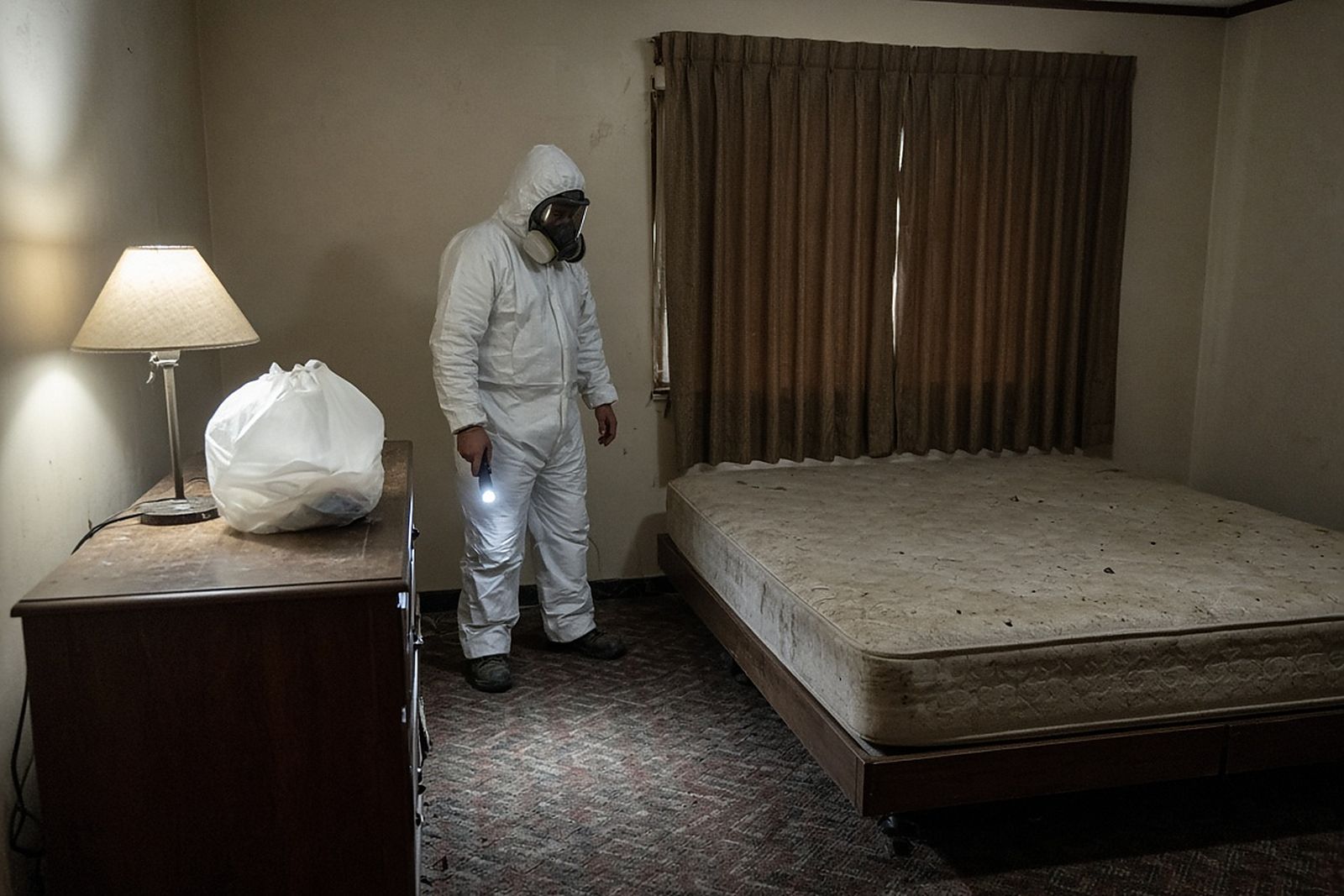
Knowledge quiz
Test whether you would make the safer call when you find foil, pipes, syringes, or unknown powder, then review the study guide.