Short answer
As a property manager, your job after finding drug paraphernalia is to control access, protect staff and neighbors, document what you saw, check lease and legal obligations, and hire a provider with a written scope. Do not let maintenance staff sweep or bag unknown items. Decide who approves changes, who talks to the tenant, and what condition the unit must meet before it goes back on the market.
The first ten minutes
Most discoveries happen during routine work: a move-out inspection, a maintenance call, a pest treatment, or a smoke-detector check. The person who finds the items is usually a leasing agent or a technician who has never been trained for this. Your first policy should be simple enough for them to follow under stress.
Tell staff to stop, step back, and leave the unit without touching anything. Loose syringes, burnt foil, glass stems, small baggies, and unexplained powder should all be treated as unknown and potentially hazardous. Nobody should pick items up to get a better look, and nobody should sniff a residue to guess what it is.
Once they are out, they should close and lock the door, note the time, and call their supervisor. If they can take a few photos from the threshold without stepping in, that record helps the next decision. If anyone was stuck by a needle or feels unwell, medical care comes before any paperwork.
- Stop work and leave without touching items.
- Lock the unit and restrict keys or codes.
- Photograph from the doorway only if it is safe.
- Report to a supervisor and log the time.
- Seek medical care right away after any needlestick or symptoms.
Do you need to call the police first?
Not every discovery is a police matter, but some are. If you find what looks like a large quantity of drugs, weapons, signs of manufacturing, or anything suggesting a person is in danger, contact law enforcement before you arrange cleaning. If officers become involved, the unit stays closed until they release it.
For a vacated unit with scattered personal-use items, many managers go straight to a cleanup provider. Your company policy, your lease, and your city's ordinances should guide this choice, and a quick call to your legal counsel is worth making when you are unsure.
Either way, keep your notes factual. Write down what was seen, not what you assume happened. A line that reads "glass pipe on kitchen counter, two capped syringes in bathroom trash" is far more useful later than a guess about who used them.
Tenants and neighbors
If the unit is still occupied, you are balancing safety with the tenant's rights. Entry notice requirements, lease clauses about illegal activity, and fair housing protections all apply. Some residents may be in recovery, and substance use disorder can intersect with disability protections. Speak with counsel before you take any step that looks like an eviction.
Keep communication calm and private. A short written notice that explains a professional crew will be entering to address a safety concern, with the date and time, is usually enough. Avoid accusations in writing, and never post details on a door or in a shared hallway.
Neighbors often notice a crew in protective suits. You do not owe them the story, but you can reassure them that a safety concern is being handled by trained professionals. If you have reason to think common areas such as stairwells, laundry rooms, or trash enclosures also contain sharps, include those spaces in the scope and tell residents to avoid them until they are cleared.
What belongs in the work order
A vague request like "clean the unit" invites a vague result. Your written scope should say which rooms, which common areas, and which vehicles or storage spaces are included. It should also say who on your side can approve changes, because a crew may find more once drawers, closets, and ceiling tiles are opened.
Ask the provider to describe how they will search, how they will handle sharps, and how they will manage unknown powders. You want to hear about wet wiping, sealed packaging, and a refusal to dry sweep or vacuum loose residue. You also want to know how waste leaves the property and who receives it.
Spell out what finished looks like. For some turnovers, that means paraphernalia removed and hard surfaces washed. For others, especially where heavy smoking happened, it may include soft goods removal, HVAC filter replacement, or post-cleaning sampling. Put the restart condition in writing so leasing staff know when the unit can be shown.
- Areas included, with unit number, rooms, and any common spaces.
- The person authorized to approve change orders.
- Search, sharps, and powder-handling methods.
- Waste packaging and disposal destination.
- The condition required before re-rental.
How worried should you be about fentanyl?
Take it seriously without letting fear drive bad decisions. Fentanyl is potent, and a fine powder can lift into the air when it is disturbed. That is exactly why dry sweeping, shaking out bedding, or running a shop vacuum over powder is a poor idea.
At the same time, medical toxicologists have pushed back on stories of people collapsing from brief incidental contact. The practical lesson for you is caution and good technique, not panic.
Ask whether the crew carries naloxone and knows how to use it. It is a reasonable precaution, and a professional provider will not be offended by the question.
Your own maintenance team deserves the same care. If a technician must enter a unit before the crew arrives, for example to shut off water from a leaking fixture, they should wear disposable gloves, avoid touching anything unrelated to the task, and leave by the same path they came in. Afterward, they should wash their hands and forearms with soap and water rather than using alcohol-based sanitizer alone, and bag the gloves for the crew to dispose of with the rest of the waste.
A move-out inspection that changed plans
Here is how that can look in practice, using a made-up but typical case. Say you manage a mid-size apartment community. A leasing agent doing a move-out walk in a one-bedroom unit finds burnt foil in the bathroom, a few syringe caps on the bedroom floor, and a strong stale odor. The tenant has already returned the keys, and a new resident is scheduled to move in the following week.
The agent backs out, locks the door, and calls you. You check the lease file, confirm the unit is legally vacated, and decide no police report is needed because nothing suggests activity beyond personal use. You reschedule the incoming resident and call a cleanup provider.
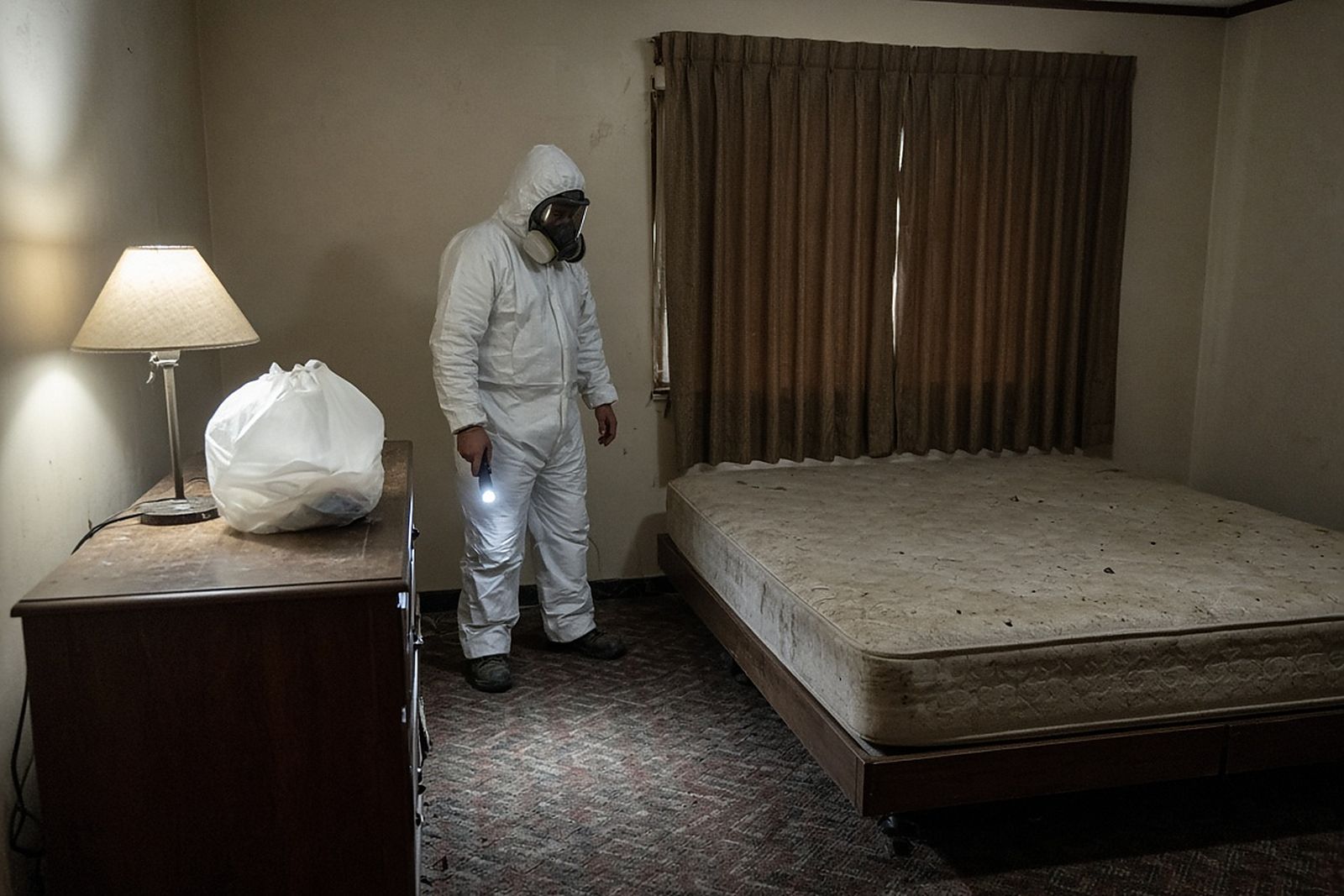
Your work order names the unit, its storage closet, and the dumpster enclosure the former tenant used. It says your regional manager approves any change orders. During the search, the crew finds a sharps cache inside the bathroom vanity and recommends replacing the bedroom carpet. The regional manager approves the carpet in writing. At closeout, you receive photos, a waste record, and a list of what was removed. Your maintenance team repaints, and the unit is released for leasing once every item on the restart checklist is signed.
Records to keep afterward
Treat this like any other significant maintenance event. Keep the initial incident note, the photos from the doorway, the work order, any change approvals, the provider's final report, waste manifests or disposal receipts, and any lab results. Store them together in the unit file.
This record helps if you file an insurance claim, if a former tenant disputes a deposit deduction, or if a future resident raises a concern. It also helps you spot patterns across your portfolio. If several units in one building need the same service, that information can shape security, lighting, and resident outreach decisions.
Check whether your state or city has disclosure rules for units with a history of drug activity. Most personal-use paraphernalia situations do not trigger the same requirements as a former manufacturing site, but the answer depends on where you operate. Confirm locally rather than assuming.
If you deduct cleanup costs from a security deposit, the itemized statement should match the provider's invoice and final report. Deposit rules, deadlines, and allowable deductions are set by state law, so review them with counsel before sending anything to a former tenant.
Preparing before the next discovery
The best time to set up a process is before you need it. Write a one-page protocol for staff, stock sealed sharps containers in the maintenance shop for emergencies, and train your team never to reach blindly into bags, under cushions, or behind appliances during inspections.
Choose a provider in advance and ask them the hard questions while nothing is urgent. How do they search? What do they wear? How do they document their work? Who handles their waste? A relationship built on clear answers will save you time and confusion when a call comes in on a Friday evening.
Finally, remember that the people connected to these units are often struggling. A resident, a former tenant, or a staff member who found something upsetting may need support. Share local treatment resources where appropriate, and if anyone is in crisis, the 988 Suicide and Crisis Lifeline is available by call or text.