Short answer
OSHA rules protect the workers who clean up drug paraphernalia rather than certifying your property. The Bloodborne Pathogens Standard covers used syringes and blood-contaminated items. Hazard communication covers the cleaning chemicals. PPE and respiratory protection rules apply when residue or powders are present. A capable provider can explain how its program addresses each hazard at your site.
Who OSHA rules protect
OSHA regulates employers so their workers are protected on the job. When a cleanup company sends a crew into an apartment, motel room, vehicle, or encampment site with drug paraphernalia, OSHA rules shape how that company prepares and equips its people. The rules do not certify that a room is clean or that a property is safe for occupancy.
This matters when you hire. A company claiming to be OSHA approved is using a phrase that has no official meaning for cleanup services. What you want to hear instead is how the company meets its own obligations: its exposure control plan, its training, its protective equipment, and its procedures for handling what it finds.
If you are an employer asking staff to deal with paraphernalia, such as housekeeping at a hotel or maintenance at a housing complex, the rules may apply to you too. Some states run their own OSHA-approved plans with added requirements, so check with your state's occupational safety and health office if you are in one of them.
The Bloodborne Pathogens Standard comes first
Used syringes are the most obvious hazard in paraphernalia cleanup, and they fall squarely under OSHA's Bloodborne Pathogens Standard. That rule applies whenever employees can reasonably be expected to contact blood or other potentially infectious materials. It also reaches blood-stained bedding, tissues, cotton filters, and cookers.
The standard requires a written exposure control plan, proper sharps containers, training before assignment and at regular intervals, a free hepatitis B vaccination offer, and confidential medical follow-up after any exposure incident. Those elements are the backbone of a professional program.
The risk is real even for trained professionals, and cleanup crews meet it in hidden places: under mattresses, inside couch cushions, in bathroom ceiling tiles, and in the pockets of abandoned clothing.
Hidden sharps are why search technique is treated as a safety control. Crews pat down fabric with a tool before lifting it, look before reaching into drawers or under furniture, and use flashlights and mirrors for dark spaces. Those habits keep hands away from needles in a way that no glove can fully match.
Chemicals and hazard communication
Paraphernalia cleanup involves two kinds of chemicals. The first is whatever residue the drugs left behind. The second is the cleaning and disinfecting products the crew brings. OSHA's hazard communication standard focuses mainly on the second group, requiring employers to keep safety data sheets, label containers, and train workers on the products they use.
Residue from illicit drugs is harder to plan for because it is unlabeled and unknown. A careful provider treats unknown powders, stains, and burned material as potentially hazardous, avoids creating dust, and chooses cleaning methods that lift residue rather than spreading it around.
Crews should also know what not to mix. Bleach combined with ammonia-based or acidic cleaners can release toxic gases. A technician who understands the products on the truck is less likely to create a new hazard while cleaning up an old one.
When do respirators and full PPE become necessary?
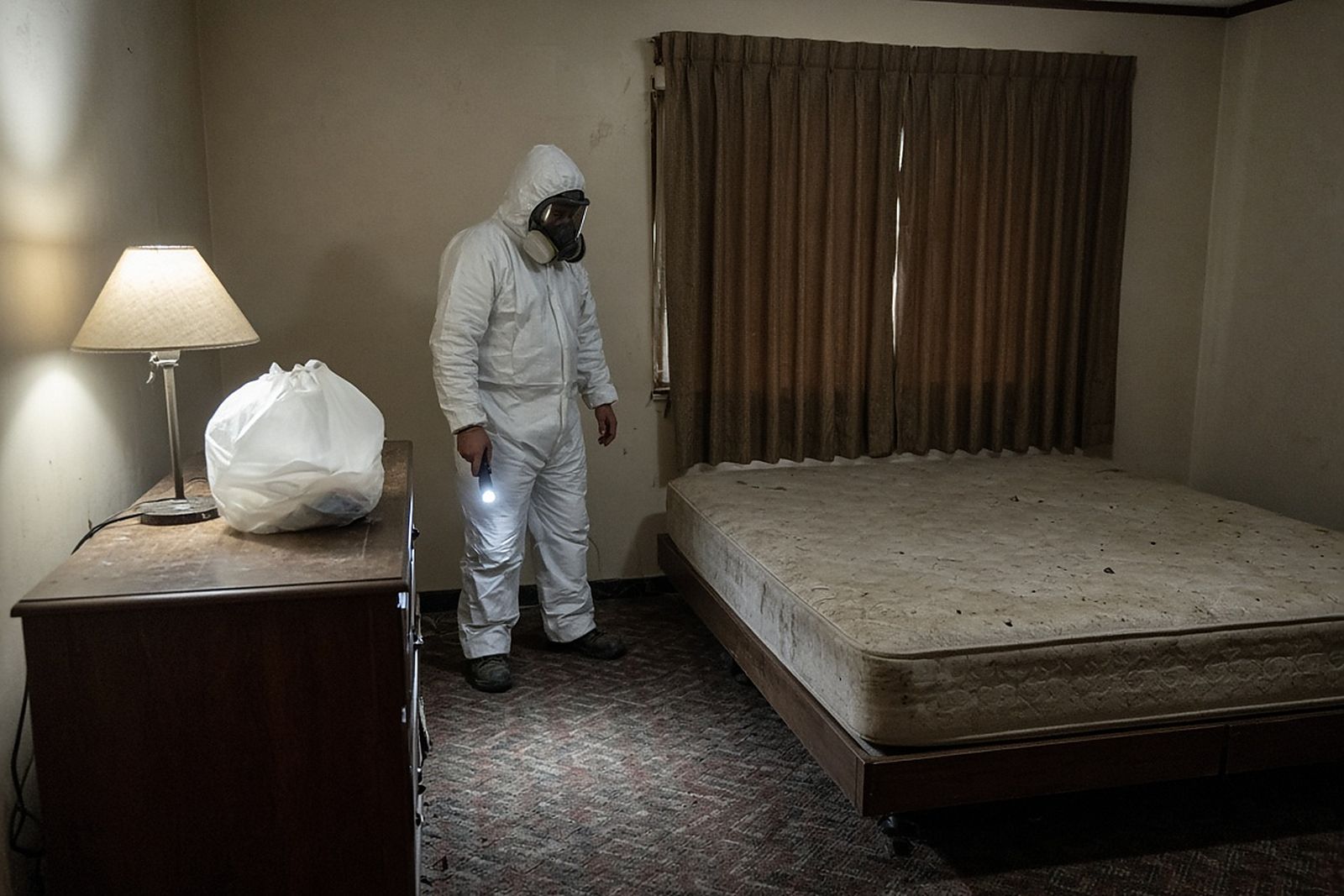
Many paraphernalia jobs are handled with gloves, eye protection, puncture-resistant footwear, and no-touch tools. Others call for more. Visible powders, heavy smoke residue, suspected drug manufacturing, or poorly ventilated spaces may lead a provider to add respiratory protection and disposable coveralls.
Once an employer requires respirators, OSHA's respiratory protection standard comes with them. That means a written program, a medical evaluation for each wearer, fit testing with the specific respirator, and training on use and limitations.
The general PPE standard also expects employers to perform and document a hazard assessment before selecting equipment. In practice, a crew arriving at a motel room with a few pipes and a strong odor may dress differently from one entering a house where bags of powder were found. Both choices should be deliberate.
Footwear and knees are easy to overlook. Syringes on carpet or tucked between floor and baseboard can pierce thin soles, and kneeling on a mattress or pile of clothing is risky. Puncture-resistant boots and a kneeling pad that can be disinfected or discarded help protect the parts of the body that touch the floor.
Fentanyl exposure: what the science says
Fentanyl understandably worries people. It is important to respect the hazard without overstating it. Medical toxicologists at the American College of Medical Toxicology and the American Academy of Clinical Toxicology calculated in 2017 that at the highest airborne fentanyl level measured in workplaces, an unprotected person would need nearly 200 minutes of breathing to absorb a 100 mcg dose. Brief incidental contact with intact skin is also considered very unlikely to cause serious toxicity.
That does not mean residue can be ignored. In a 2020 NIOSH health hazard evaluation of drug-evidence labs, 9 of 13 chemists had detectable fentanyl on their hands after a shift. Residue can transfer to hands, phones, and food if people are careless, which is why glove discipline and handwashing matter.
Good practice is straightforward: wear nitrile gloves, avoid touching the face, do not dry sweep powders, wash hands with soap and water rather than alcohol sanitizer after handling residue, and keep naloxone available. A provider who describes this kind of routine calmly is usually more trustworthy than one who either dismisses the risk or dramatizes it.
Training technicians should receive
Training ties everything together. Workers need to understand the hazards they will face, the protective measures in place, and what to do when something goes wrong. For paraphernalia work, that training usually spans several topics.
Refresher training matters as much as the first session. Drug supplies change, and so do the items crews encounter. A company that updates its training when new substances or practices appear in its service area is keeping its people current.
- Bloodborne pathogens, sharps handling, and post-exposure steps.
- Recognizing paraphernalia types and where they tend to be hidden.
- Handling unknown powders and residues without creating dust.
- Chemical safety for the cleaning and disinfecting products used.
- Respirator use, fit, and limitations, where respirators are required.
- Recognizing signs of an opioid overdose and using naloxone.
Responding to an exposure incident
Even careful crews face occasional incidents: a needlestick through a glove, residue splashed into an eye, or a technician who feels unwell after entering a room. OSHA expects employers to have a plan and follow it.
For a needlestick, the injured worker washes the area with soap and water and seeks prompt medical evaluation, and the employer provides confidential follow-up. For residue on skin, the worker removes contaminated gloves or clothing and washes with soap and water. For any sign of possible opioid toxicity, such as unusual drowsiness or slowed breathing, the crew calls 911 and uses naloxone.
Incidents should be documented, and certain injuries must be recorded under OSHA rules. The goal is not paperwork for its own sake; it is learning what went wrong so the next job goes better.
A clear post-incident review also protects the rest of the team. If a stick happened while pulling a needle from a couch cushion, for example, the crew might adopt a rule that upholstered furniture is probed with a tool along every seam before anyone lifts a cushion.
Employers: from a trash bag to a written plan
Many apartment complexes and hotels start with an informal habit: whoever finds syringes, pipes, burned foil, or small bags with residue during a unit turnover gathers them into a trash bag. That habit tends to last until someone is stuck by a needle hidden in a closet.
A review after an incident like that often turns up the same gaps: no bloodborne pathogen training, no sharps containers, no written plan, and no hepatitis B vaccine offer for staff who could reasonably be exposed. Each of those is an employer obligation once the exposure is foreseeable.
A workable replacement is simple. Staff who find paraphernalia stop, close the unit, and notify a supervisor. Units with only a few items can be handled by trained staff with proper containers and PPE. Units with heavy residue, many sharps, or anything that looks like drug preparation go to a professional cleanup provider, and the employer asks to see that provider's exposure control plan and training records before work begins.
Compliance questions for a provider
You do not need to audit a company's safety program, but a few questions will tell you whether it has one. Pay attention to how specific and comfortable the answers are.
Treat respectful language as part of the evaluation. People who use drugs are often the family members, tenants, or neighbors of the people hiring cleanup. A provider that speaks about them with dignity is more likely to handle your situation with discretion and care.
- Do you have a written exposure control plan, and can you describe it?
- How do your technicians protect themselves from hidden needles?
- How do you handle unknown powders and residues?
- When do your crews wear respirators, and are they fit tested?
- Do your crews carry naloxone and know how to use it?