Short answer
Environmental responsibility in drug paraphernalia cleanup means sharps go into rigid containers and a proper medical waste stream, drugs and residue are never flushed or dumped, rinse water is managed rather than poured outside, and soft goods are discarded only when an observation justifies it. It also means choosing effective cleaning products used at label strength and asking providers where every category of waste ends up.
Why the environment matters here
Most people who call about paraphernalia are focused, rightly, on safety. They want syringes gone, powders contained, and the space usable again. Environmental questions can feel like an afterthought. But the choices made during cleanup decide where needles, drug residue, contaminated water, and bulky furniture end up, and those destinations affect sanitation workers, neighbors, and waterways long after the crew leaves.
A syringe tossed in household trash can injure a waste hauler. Powder flushed down a toilet enters the sewer system. Rinse water dumped in a storm drain goes straight to a creek in many communities. A mattress discarded without need adds to landfill volume. None of these outcomes is dramatic on its own, but they add up across thousands of jobs.
Responsible providers think about the full path of each waste stream. As the person hiring them, you have every right to ask how they do it.
Where syringes and other sharps should go
Sharps belong in rigid, puncture-resistant containers that close securely. Once sealed, they should go to a disposal route that accepts them, which for a professional crew usually means a licensed medical waste hauler or treatment facility. Household trash, recycling bins, and loose bags are not acceptable destinations.
The reason is simple: people downstream handle that waste. Collection workers, sorting-line staff, and landfill employees can all be stuck by a stray needle. A crew that counts sharps during the search and then documents the sealed containers leaving the property closes that gap.
Rules on sharps disposal differ widely. Some jurisdictions let residents place sealed containers in household trash, while others require drop-off or mail-back programs, and commercial generators often face stricter rules. Your county solid waste or environmental health office, or your provider, can tell you which route applies to your job.
- Rigid, puncture-resistant, sealable containers.
- A running sharps count during the search.
- A licensed hauler or approved disposal route.
- Written confirmation of where containers went.
Drugs, powders, and residue
Drugs and suspected drug powders should never be flushed, poured down a sink, or scattered outside. Flushing moves active compounds into wastewater systems that were not designed to remove all of them. It also destroys any chance to identify the material if that matters later.
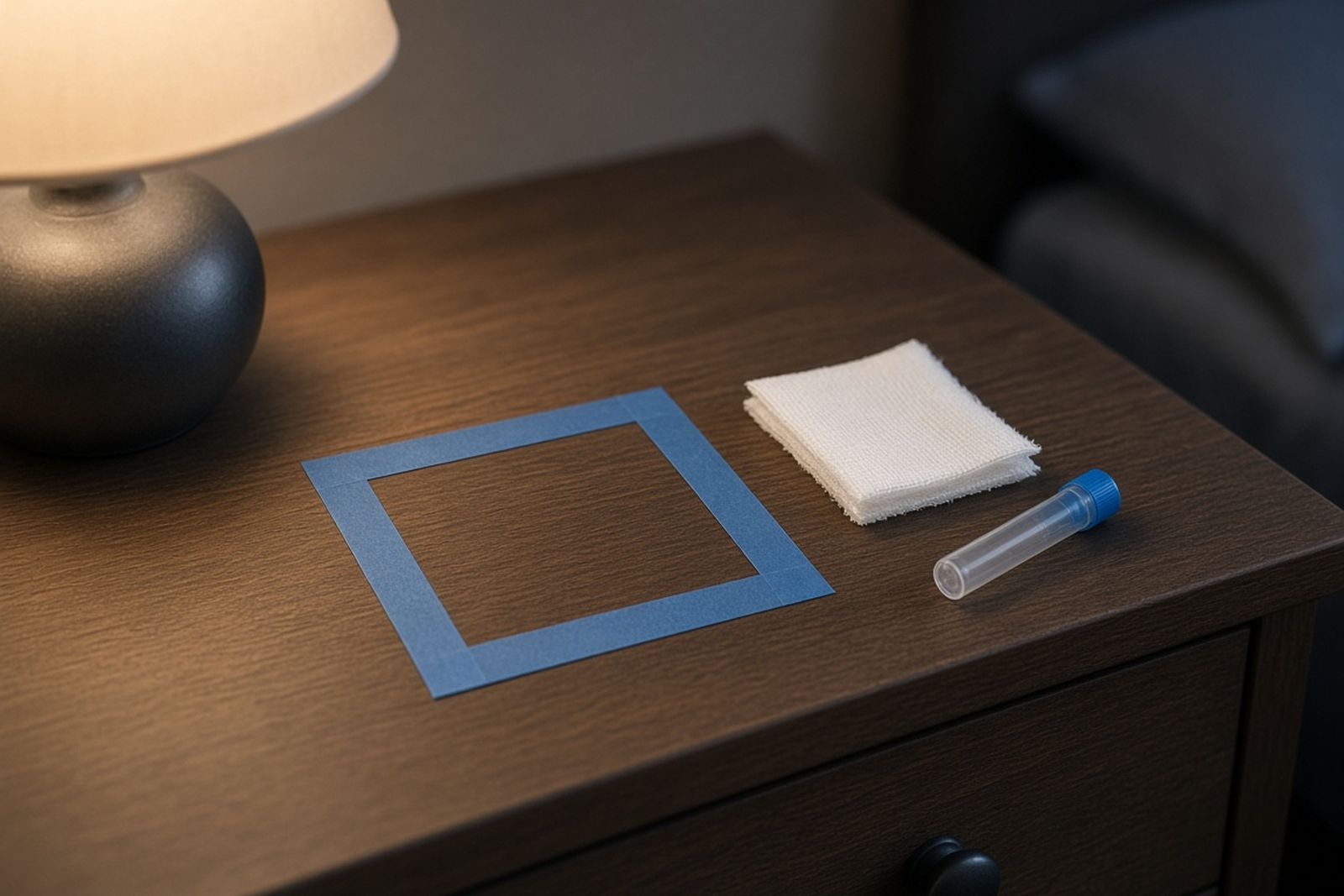
Professional crews typically wet the material lightly to prevent dust, collect it with wipes or absorbent pads, and seal it in labeled bags or containers. If law enforcement is involved, they may take custody of drugs. Otherwise, the provider should explain how the sealed material is disposed of and through which waste stream.
Wipes, gloves, suits, and other disposable items used during the search also carry residue. They should be bagged at the work area, not carried loose through the home, and disposed of with the rest of the contaminated waste.
Paraphernalia that is not a sharp, such as glass pipes, foil, straws, and small bags, should also stay out of recycling. Glass stems and bowls may carry residue and can break into sharp fragments, so crews usually place them in rigid containers alongside needles or in heavy sealed bags, depending on what their disposal route accepts.
Rinse water and cleaning solutions
Cleaning residue from walls, counters, and floors produces dirty water and saturated wipes. That water carries whatever was on the surfaces: drug residue, body fluids, and cleaning chemicals. Dumping it on a lawn, in a gutter, or into a storm drain is not appropriate. In many areas, storm drains lead directly to local waterways without treatment.
Many crews prefer methods that minimize free water, such as damp wiping with disposable cloths rather than heavy mopping. Wipes can be bagged with other waste. Where larger volumes of rinse water are unavoidable, the provider should know what their local wastewater authority allows and follow it.
Product choice matters too. More chemical is not better. Using detergents and disinfectants at the dilution the label specifies removes residue effectively without loading extra chemicals into the waste stream. Mixing products, especially bleach with ammonia or acids, is dangerous and never justified.
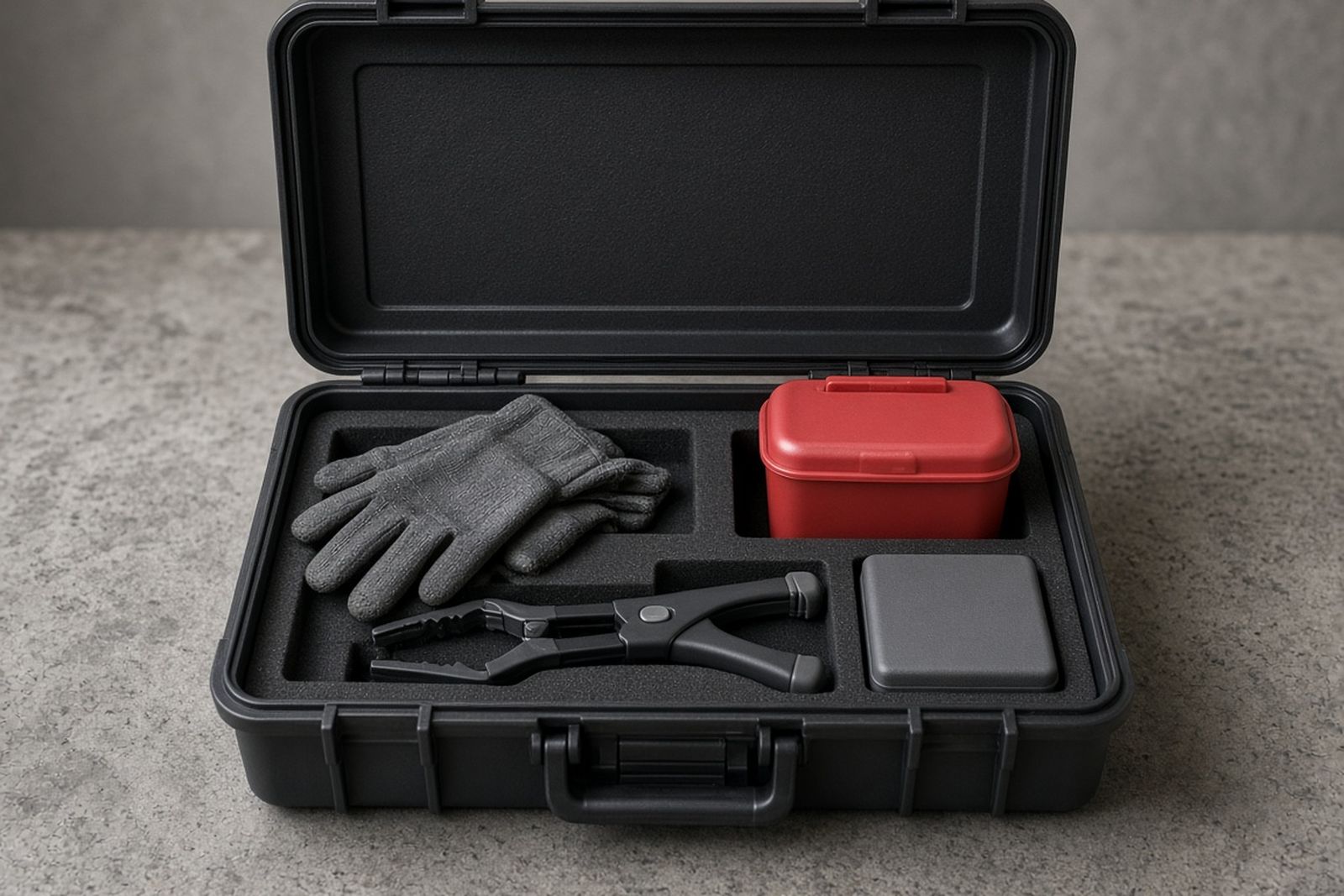
Protective equipment choices affect waste volume as well. Disposable suits and gloves are necessary for this work, but a well-organized crew changes them at sensible points rather than constantly, and it sets up a single doffing area so that used gear is bagged in one place. Reusable tools, such as grabbers and sharps tongs, are cleaned and disinfected between jobs rather than thrown away.
When should furniture and soft goods be discarded?
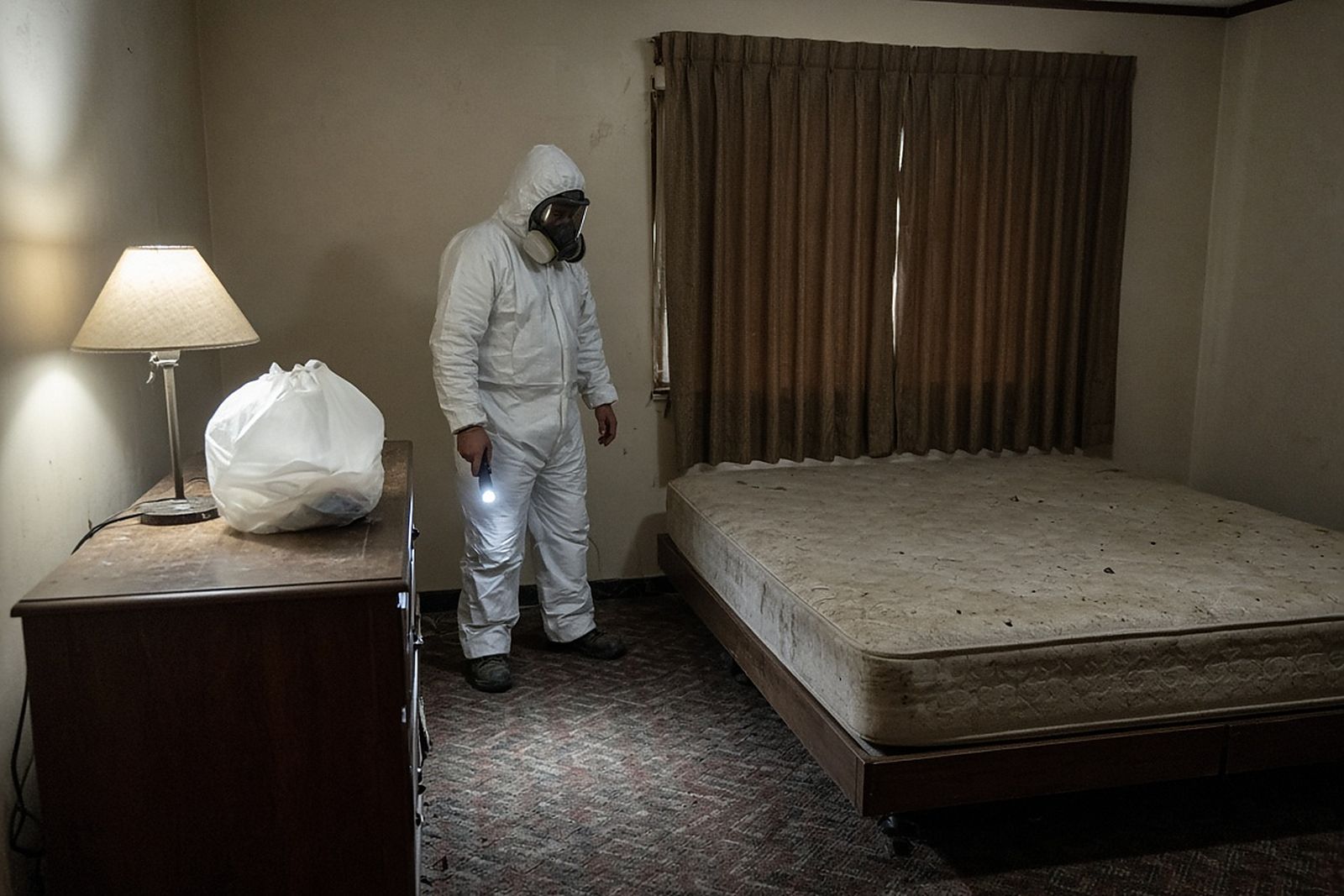
Mattresses, upholstered chairs, carpet, and bedding are often the largest volume of waste in a paraphernalia job. Sometimes discarding them is the right call: sharps may be hidden inside, blood may have soaked in, or heavy smoke residue may have penetrated fibers. Other times, a stained but otherwise sound item can be cleaned, and discarding it only adds to landfill volume.
A responsible provider ties each disposal recommendation to something observed. "Sharps found inside the cushion" or "blood soaked through to the foam" is a clear reason. "We always throw out mattresses" is not. Ask for the reason, and ask whether cleaning or a targeted repair, such as replacing a carpet pad in one area, is possible.
When items do need to go, ask whether the provider wraps them to prevent sharps injuries or residue transfer during handling, and where the items are taken. Some bulky waste can go to standard facilities once wrapped; items with sharps or fluids may need a different route.
Items that are kept should be cleaned before they return to use. Hard furniture such as dressers, tables, and metal bed frames can usually be searched, washed, and kept. That decision alone can keep a significant share of a room's contents out of the landfill without compromising safety.
Community disposal infrastructure
Environmental responsibility is not only about cleanup crews. Discarded syringes in parks, alleys, and stairwells are an ongoing issue in many places, and public disposal options can reduce them. In a 2021 Philadelphia neighborhood study, Roth and colleagues found that 78% of respondents had noticed a public syringe-disposal box.
Programs that pair disposal options with outreach may also make a difference. Levine and colleagues reported in 2019 that discarded syringes found on walkthroughs declined 49% after a syringe services program was implemented in their study area. Local results vary, and your community's approach will reflect its own needs and policies.
If you manage a property where discarded needles are a recurring problem, ask your local health department about disposal box programs or outreach services nearby. Reducing how many needles end up on the ground reduces how many need emergency cleanup later.
Questions about a provider's environmental practices
You do not need to be an expert to ask good questions. A few direct ones will tell you whether a provider has thought about the full path of the waste they create.
Listen for specifics. A provider who names their medical waste hauler, describes how they handle rinse water, and explains when they recommend keeping rather than discarding items is showing you how they work. Vague reassurance is a sign to keep asking.
- Who hauls your sharps and contaminated waste, and do I get a record?
- How do you handle powders without flushing or creating dust?
- What happens to rinse water and used cleaning solution?
- How do you decide whether furniture can be cleaned instead of discarded?
- Which cleaning products do you use, and at what dilution?
How does this connect to the people involved?
Environmental care and human care overlap. Properly disposed needles protect sanitation workers and children in parks. Reduced chemical use protects the next occupant with asthma. Thoughtful decisions about belongings respect the person who lived in the space, whatever their circumstances.
If this cleanup is connected to someone you care about, remember that support is available for you too. Local treatment programs, family support groups, and, in a crisis, the 988 Suicide and Crisis Lifeline by call or text can help you through the parts that no crew can clean.