Short answer
To research waste rules for drug paraphernalia cleanup, sort what you found into streams: sharps, blood-contaminated items, residue-cleaning waste, bulky soft goods, and any remaining drugs. Sharps usually follow state medical waste rules. Other debris is often bagged household or commercial waste, depending on your area. Remaining drugs are a law enforcement question. Check your state, county, and hauler before disposal.
Why EPA guidance only goes part of the way
EPA pages are a common starting point when people search for disposal rules, but they rarely give a complete answer for paraphernalia cleanup. The agency's hazardous waste program focuses on industrial and commercial chemical waste, and household waste is largely exempt. Medical waste, including syringes, has been left mainly to the states.
EPA does publish voluntary guidance for cleaning up former methamphetamine and fentanyl labs, and it offers useful background on drug hazards. In its 2021 guidelines, EPA describes fentanyl as roughly 100 times stronger than morphine, with particles of 0.2–2.0 microns that become airborne easily. That explains why cleanup waste from residue-heavy sites is handled carefully, even when the rules for disposal are local.
In practice, your state environmental agency and your county health department set most of the answers that matter. The approach below helps you find the right one for each type of material.
For businesses, the answer can differ again. A hotel, shelter, or property management company that collects paraphernalia regularly may be treated as a generator of regulated waste, with its own storage and recordkeeping expectations. Ask your commercial hauler and state agency rather than assuming household rules apply.
Six waste streams from a paraphernalia cleanup
Sorting the debris into streams keeps disposal organized and makes each question easier to answer. A crew typically separates materials as it works, rather than trying to sort a mixed pile later.
Small jobs may produce only one or two streams, such as a sharps container and a bag of pipes and foil. Larger jobs, especially after long-term use or an eviction, can involve every stream on the list.
Separating streams also protects belongings. Items the family or owner wants to keep, such as photos, documents, and clothing that can be laundered, should be set aside early and checked for sharps with a tool, so they are not bagged and discarded along with the debris.
- Sharps: syringes, needles, and broken glass that can puncture skin.
- Blood-contaminated items: cotton, tissues, bandages, and stained fabric.
- Paraphernalia: pipes, foil, spoons, straws, scales, and baggies.
- Cleaning waste: wipes, paper towels, and used protective gear.
- Bulky soft goods: mattresses, upholstered furniture, carpet, and pad.
- Any remaining drugs or suspected drugs.
Sharps
Sharps should always go into a rigid, puncture-resistant, closable container at the point of pickup. Nobody should carry loose syringes across a room or push them into a trash bag.
Where the container goes next depends on who is doing the cleanup and where you live. When a business or cleanup company collects sharps, the containers usually go through a licensed medical waste hauler to a permitted treatment facility. Some states have separate rules for household-generated sharps that allow drop-off or mail-back programs.
Public disposal boxes can help with ongoing problems but are not a disposal route for cleanup companies. They are designed for individuals. In Philadelphia's Kensington neighborhood, Roth and colleagues found in 2021 that among those who noticed a public box, 34.1% had used one. If needles are a recurring issue near your property, a nearby box may reduce future finds.
Containers should be closed once they reach the fill line marked by the manufacturer, and never shaken or pressed to make room. If a container is overfilled when a crew arrives, the safe approach is to close it as it is, place it inside a larger rigid container, and seal that outer container.
Blood-contaminated items and soft goods
Items saturated with blood can fall under state medical waste rules in some cases, especially when they come from a business. In other cases, particularly for smaller amounts in a home, bagging them securely with household waste may be acceptable. The distinction varies by state, so this is a question worth asking your health or environmental agency.
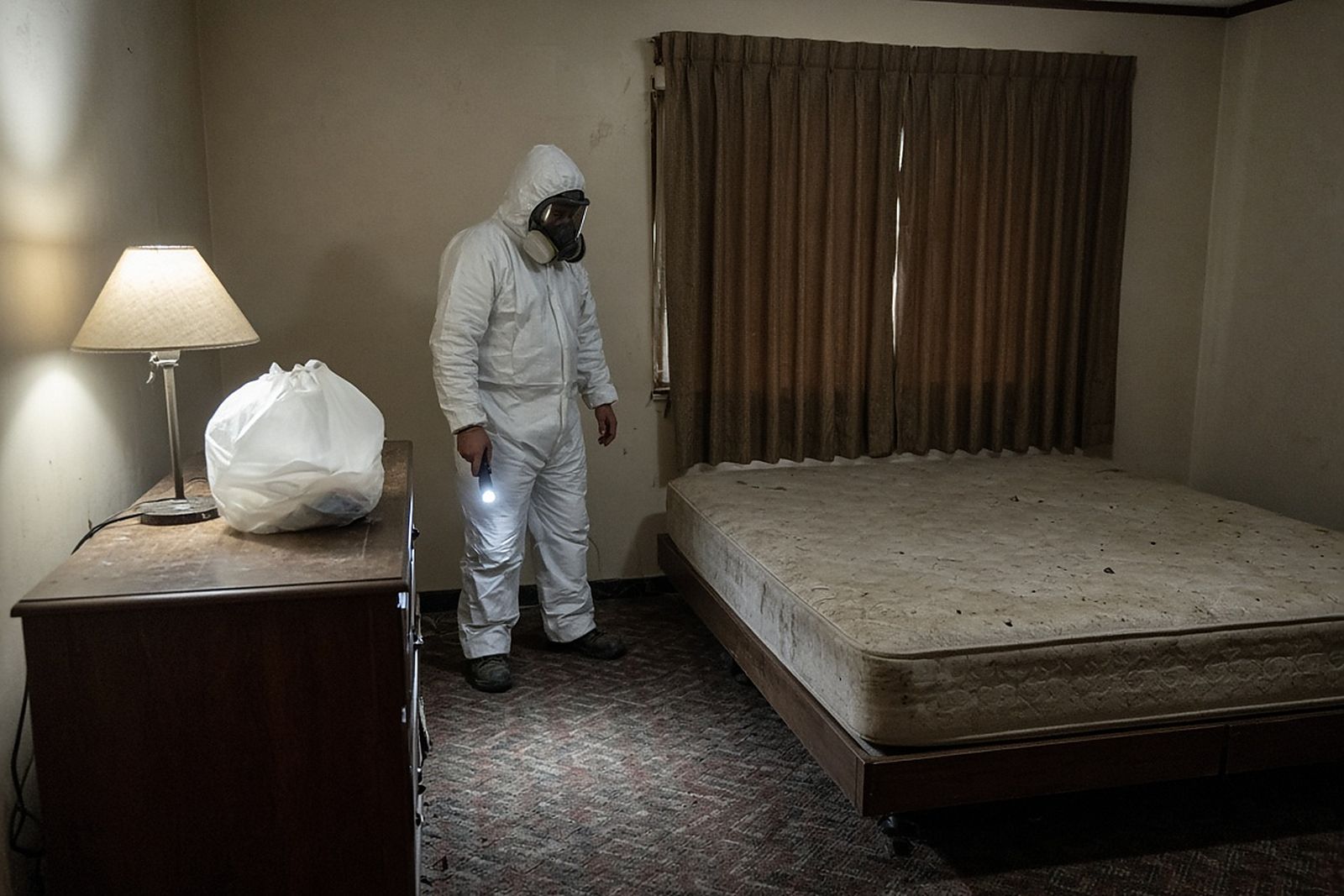
Mattresses, carpet, and upholstered furniture removed during cleanup are usually bulky waste. Before disposal, crews search them for sharps, remove any they find, and wrap the item in heavy plastic. Many areas require bulky items to go to a transfer station or be scheduled for special pickup.
Be aware that some areas have rules about mattress disposal or recycling. If you plan to discard a mattress, check local requirements, and make sure anyone handling it knows whether it was searched for sharps.
Packaging residue-cleaning waste
Wipes, paper towels, and gloves used to clean residue should be bagged as they are used, not left in a pile. Double-bagging with sturdy bags reduces the chance of tears. Bags should be tied closed and kept away from children and pets until disposal.
For most residential paraphernalia jobs, this cleaning waste goes out with household or commercial trash once it is bagged, but local rules and hauler policies vary. If a site had heavy powder residue or signs of manufacturing, waste handling may fall under a stricter state program.
Cleaning methods affect the waste, too. Detergent and water with disposable wipes tends to produce manageable waste. Dry sweeping or vacuuming residue is discouraged because it can spread particles and contaminate equipment.
Used protective gear belongs in the same bags as other cleaning waste. Outer gloves, coveralls, and shoe covers go in as they come off at the exit, and the bag is closed before the crew leaves the room. Reusable items are cleaned on site rather than carried out dirty.
What should you do with any remaining drugs?
This is not a waste disposal question as much as a legal one. If you find what appear to be illicit drugs, do not handle them more than necessary and do not throw them away. Contact your local law enforcement agency on its non-emergency line and ask how they want it handled.
Prescription medications found during cleanup are different. Many pharmacies and police stations host medication take-back boxes, and some communities hold take-back events. Check the rules for each program, since they generally do not accept illicit drugs or sharps.
A cleanup provider should follow the same approach: stop, avoid disturbing suspected drugs, and let the property owner or law enforcement decide how to proceed. A provider that offers to simply throw them away is cutting a corner that could create problems for you.
Example: a family clearing a relative's apartment
The following example is invented, but it mirrors a common situation. After a loved one enters residential treatment, a family agrees to clear out his apartment before the lease ends. They find syringes in a nightstand, burned foil and a pipe in the bathroom, a stained mattress, and a small bag of powder in a kitchen drawer.
The family pauses before touching anything. They call the police non-emergency line about the powder, and an officer collects it. They then hire a cleanup provider. The crew places syringes in a sharps container, bags the foil and pipe with other debris, searches and wraps the mattress, and cleans surfaces with detergent and wipes, bagging everything as it goes.
The provider explains that the sharps container will go to a licensed medical waste hauler, the mattress to the county transfer station, and the bagged debris to regular commercial trash, consistent with local rules. The family receives a short report listing each stream and its destination, which they keep with the lease paperwork. They also look up support resources for their relative and themselves.
In a situation like this one, compassion matters as much as procedure. The family is dealing with a hard moment, and a provider that works quietly, explains each step, and handles personal belongings with respect makes the process easier to bear.
Questions for your hauler and local agencies
A few quick questions can prevent rejected pickups and surprise fees. They also give you clear answers to share with any contractor you hire.
If you hire a provider, ask how it will handle each stream and where each will go. Experienced providers usually know the local rules and can take care of disposal as part of the job, but you should still receive documentation.
- Where should collected sharps from a cleanup go in this county?
- Are blood-stained items treated as medical waste or household waste here?
- How should bulky items like mattresses be disposed of?
- Will you accept bagged cleaning waste from a residue cleanup?
- Who should I contact about suspected drugs found during cleanup?
What is the safest approach while you research?
If you need to wait for answers, keep the area closed off, avoid handling items with bare hands, and put any syringes that must be moved into a rigid container using tongs or a similar tool. Store bagged debris somewhere secure until you know where it goes.
If you feel overwhelmed, a qualified cleanup provider can take over. Handling the waste correctly protects the people who collect, haul, and process it after it leaves your property, and it gives you a clear record that the job was done right.