Short answer
In drug paraphernalia cleanup, cleaning and disinfection target different hazards. Cleaning with detergent, water, and repeated wiping physically removes drug residue, which is chemical and not killed by disinfectants. Disinfection kills germs from blood and bodily fluids found with syringes or other items. Most jobs need both: sharps contained first, residue washed away, and blood-contaminated surfaces disinfected according to label directions.
Two hazards, two responses
Most people lump everything left behind by drug use into one category: something dirty that needs to be cleaned. In practice, paraphernalia sites usually contain two very different kinds of hazard, and each one calls for a different response.
The first is biological. Used syringes, bloody cotton, tissues, and bodily fluids can carry viruses such as hepatitis B, hepatitis C, and HIV. Those are living or infectious agents that disinfectants are designed to kill.
The second is chemical. Residue from smoking, preparing, or spilling drugs such as fentanyl or methamphetamine is not alive. A disinfectant does not kill it, because there is nothing to kill. It has to be physically removed.
Understanding that difference is the key to judging whether a cleanup was done properly. A room sprayed thoroughly with disinfectant may be free of most germs yet still carry drug residue on every surface.
Many sites also hold a third category: ordinary household mess. Food waste, dirty laundry, and clutter often accumulate during periods of heavy drug use. That material is not especially hazardous, but it hides sharps and residue, so it has to be sorted carefully before any real cleaning can begin.
What cleaning accomplishes
Think of cleaning as lifting material off a surface and carrying it away. In paraphernalia work, that includes visible powder, sticky residue, smoke film, ash, and everyday grime. It is done with detergent or cleaning solution, water, and repeated wiping with fresh cloths or towels.
Wet methods matter here. Dry dusting or sweeping can lift powder into the air, which is the opposite of what you want. Crews generally mist or wet surfaces first and wipe in one direction, folding or replacing the cloth often so residue is lifted away rather than smeared around.
Residue can persist on walls, fixtures, and furnishings long after drug use stops, which is why time alone does not clean a surface.
Several passes are often needed for heavily used areas such as bathroom counters, bedside tables, and vehicle dashboards.
What disinfection accomplishes
Disinfection uses an EPA-registered product, or properly diluted bleach where appropriate, to kill germs on a surface. In paraphernalia cleanup, it is aimed at blood and bodily fluids, not drug residue.
Bleach can be highly effective against some bloodborne viruses. A 2015 laboratory study in Open Forum Infectious Diseases found that one rinse with household bleach eliminated hepatitis C infectivity in contaminated syringes, whereas rinsing with water or 5% ethanol was ineffective. That was a lab test on syringes, not a recommendation to handle or clean discarded needles, which should always be contained and disposed of rather than treated.
On surfaces, disinfection works best after cleaning. Blood and organic material can shield germs from the product. So the usual order is to clean visible blood away first, then apply the disinfectant and let it stay wet for the full contact time listed on its label.
Choose the product with the surface in mind. Bleach can discolor fabrics, corrode some metals, and damage certain finishes, while other registered disinfectants are gentler on sensitive materials. Whatever product is used, the label directions on dilution, ventilation, and contact time are what make it work.
Where sharps fit
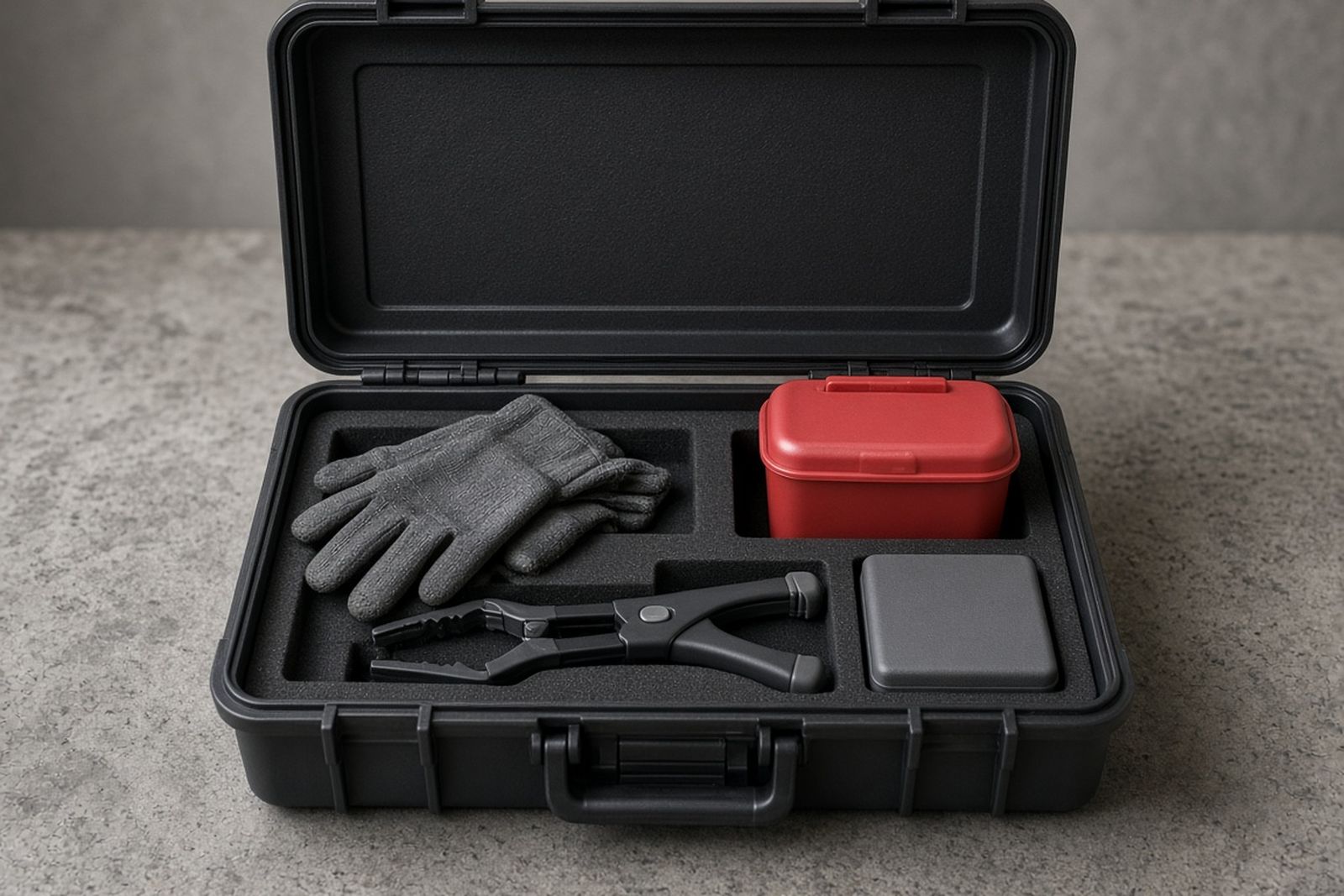
Syringes and other sharps are not cleaned or disinfected at all. They are contained. A crew picks them up with tools, places them directly into rigid puncture-resistant containers, and sends them to a licensed medical waste facility.
Trying to disinfect a syringe before disposal adds handling and increases the chance of a needlestick without making the needle any less sharp. The same is true for broken glass pipes and razor blades: they are bagged or containerized carefully and removed.
Sharps collection comes first in the sequence, before any cleaning, so technicians can wipe and scrub surfaces without the risk of an unseen needle under a cloth or in a cushion.
The right order of work
Because the hazards differ, the steps have to be arranged carefully. A typical sequence for a room with syringes, pipes, residue, and some blood looks like this.
Skipping ahead causes most of the problems people see after amateur cleanups. Disinfecting before sharps are removed invites needlesticks. Disinfecting before residue is washed away leaves chemicals in place. Following the order is what makes each step count.
- Confirm any police investigation is complete and the space is released.
- Search for and contain all sharps using tools and rigid containers.
- Bag pipes, foil, and other paraphernalia; handle leftover drugs according to local guidance.
- Remove porous items that cannot be cleaned, such as a heavily soiled mattress.
- Clean surfaces with detergent and wet wiping to remove residue, repeating as needed.
- Clean visible blood from surfaces, then apply a disinfectant for the full label contact time.
- Change gloves and wipes frequently to avoid spreading residue.
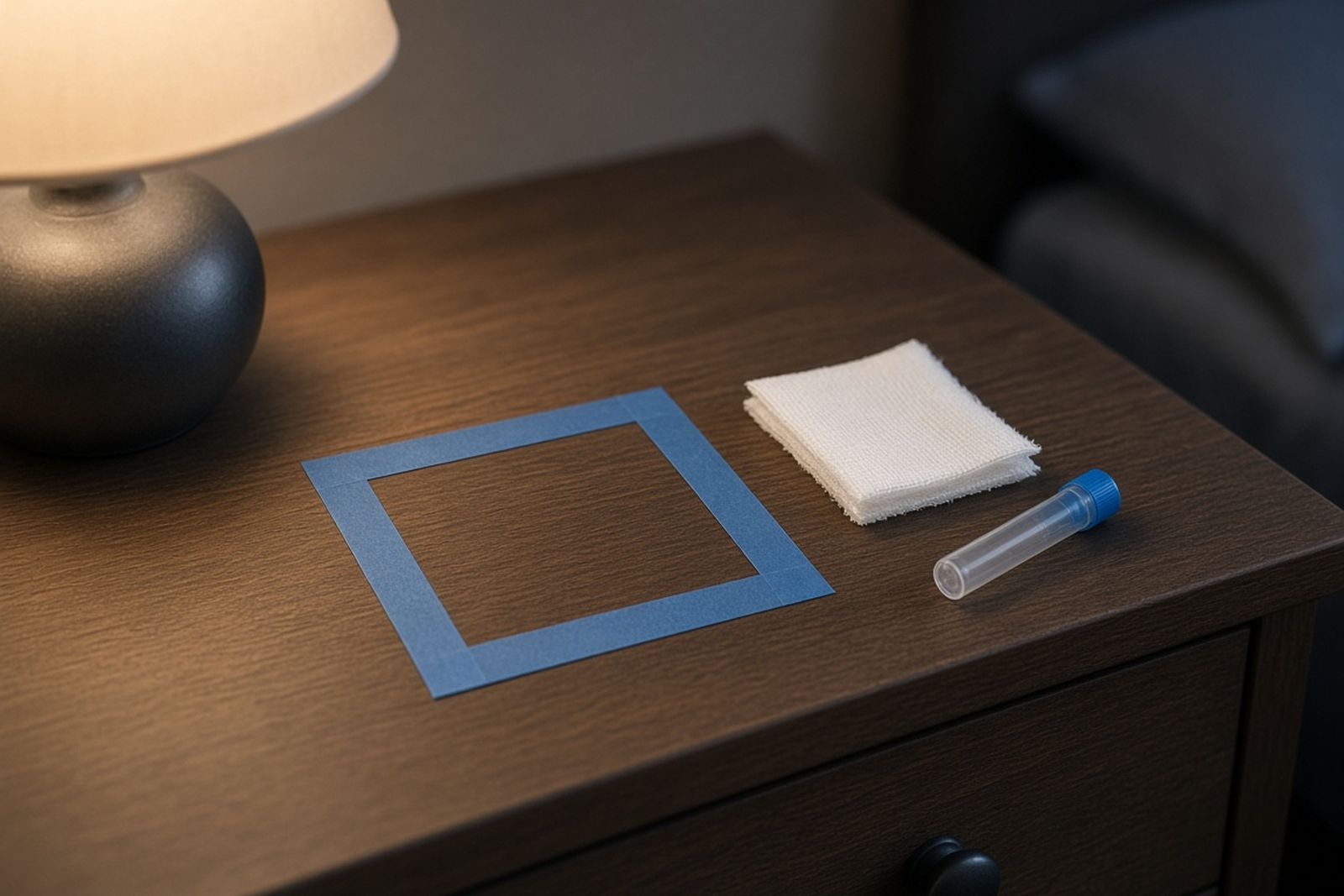
- Consider optional surface sampling if you need to know what remains.
High-touch objects, hands, and skin
Residue moves with hands. Light switches, door handles, faucet handles, remote controls, keyboards, and phone cases can all pick up residue from someone who handled drugs and then touched them. Those items are easy to overlook during cleanup.
Occupational research shows how far residue can travel. A 2026 study by NIOSH authors across 11 forensic labs found that 8 of 86 surface wipes exceeded the ACGIH fentanyl surface limit of 10 ng/cm², including on keyboards, scales, and return-air vents. Those were laboratories handling seized drugs, not homes, but the finding underlines why careful crews clean high-touch objects and not just obvious work surfaces.
For those items, cleaning is the priority. Disinfection may be added if there is blood or bodily fluid, but it does not replace the wiping that removes residue.
The same principle applies to skin. Alcohol-based hand sanitizer is a disinfectant. It can reduce germs, but it does not wash away drug residue and is not recommended for that purpose. Washing hands with soap and plenty of water is the better choice after possible contact.
Professional crews build this into their routine: gloves changed between tasks, hands washed before breaks, and no eating, drinking, or phone use in the work area. Homeowners who handle anything before the crew arrives should do the same, and should avoid touching their face until they have washed.
If you think you or someone else has been exposed and is showing symptoms such as unusual drowsiness or slow breathing, call 911 right away.
Illustration: a hotel room after a difficult checkout
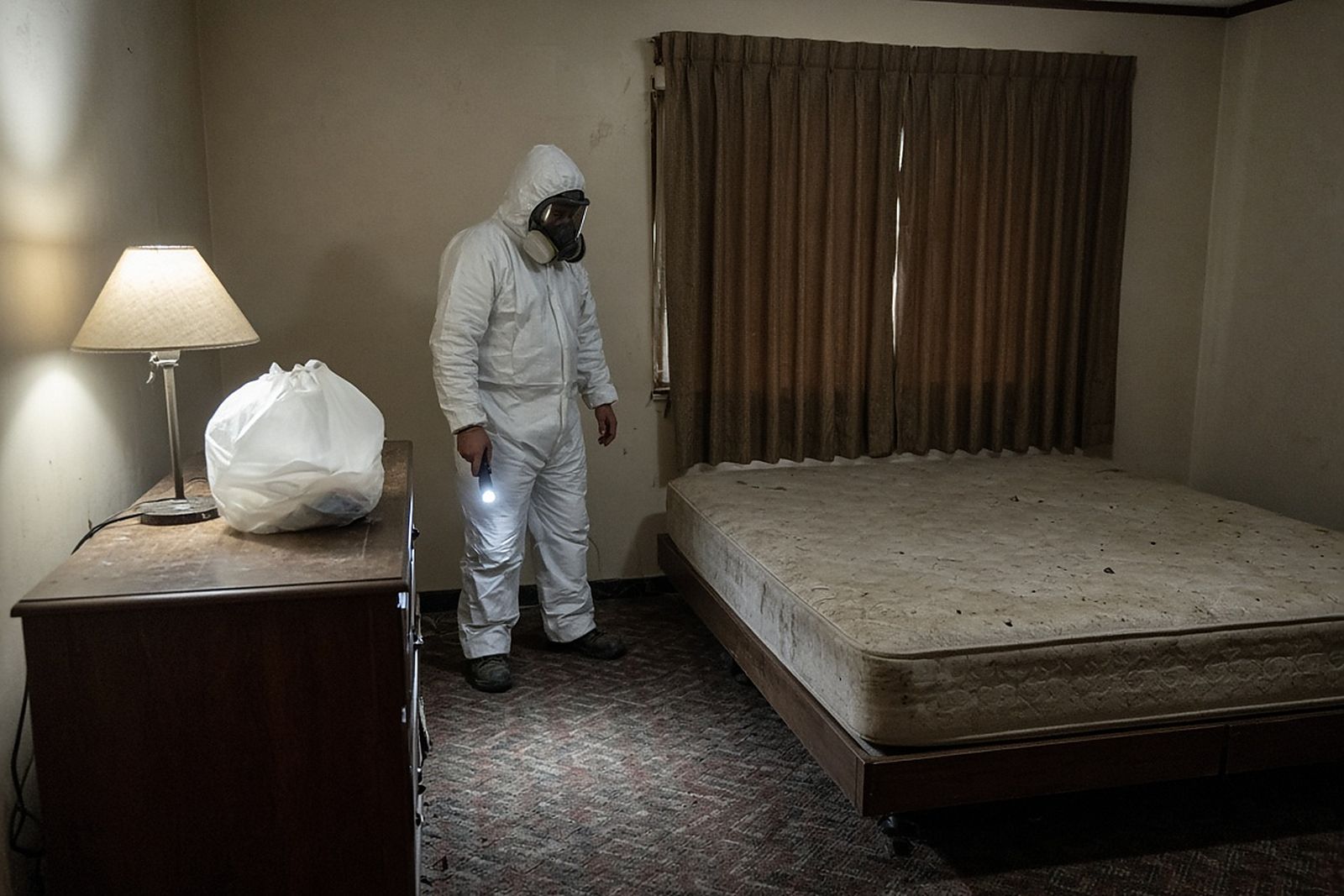
The following is an illustration, not a real case. A housekeeper at a small hotel enters a room after a late checkout and finds two syringes on the nightstand, burned foil in the bathroom, a few drops of dried blood on the sink, and powder residue on the desk. She backs out, closes the door, and alerts her manager.
The hotel calls a paraphernalia cleanup provider. The technician first collects both syringes into a sharps container and bags the foil. She then wet-wipes the desk, nightstand, remote, phone, light switches, and door handles with detergent solution, using fresh wipes for each surface and repeating on the desk where powder was visible.
Next, she cleans the dried blood from the sink and applies an EPA-registered disinfectant, leaving it wet for the full contact time. The bedding and a stained chair cushion are removed. The hotel receives a short report describing each step. If the crew had only sprayed disinfectant and wiped once, the blood might have been treated but the residue on the desk and remote would likely have remained.
What should you ask a cleanup company about residue versus germs?
Ask a company to explain how it handles residue and how it handles blood. A knowledgeable provider will describe two distinct processes: repeated wet cleaning for drug residue, and cleaning followed by disinfection with a stated contact time for biological contamination.
Be cautious if the answer is simply that the crew sanitizes or fogs everything. Fogging does not wipe residue off a surface, and a disinfectant, however strong, is not designed to remove chemicals.
It is also reasonable to ask how the company decides whether testing is worthwhile. Cleaning reduces residue, and sampling measures what is left. A provider that explains both honestly is giving you the information you need to feel confident about the space.