Short answer
Drug paraphernalia cleanup rests on two sciences. Biology explains why used syringes and blood-stained items can carry hepatitis and HIV for longer than people expect. Chemistry explains how drug residues cling to surfaces, how fine powders move through the air, and why wet wiping, correct disinfectant contact time, and careful sealing matter more than scrubbing hard or spraying heavily.
More than ordinary trash
A foil square, a glass pipe, a bent spoon, or a syringe cap can look like litter. The difference is what may be on it or in it. Paraphernalia often carries two kinds of hazard at once: biological material such as blood, and chemical residue from the substance itself.
Those two hazards behave differently. Blood-borne viruses need a way into the body, usually a puncture or contact with broken skin or mucous membranes. Drug residues are mostly a concern when they are disturbed into the air, transferred from hands to the mouth, or left where a child or pet can reach them.
Good cleanup is built around both risks. That is why a trained technician does not simply sweep items into a bag. Each category of object gets a handling method that matches how its hazard actually moves.
How long can viruses survive inside a discarded syringe?
The inside of a used syringe is a protected space. A small amount of blood trapped in the barrel or needle hub is shielded from sunlight and from drying out, which is what normally breaks viruses down on open surfaces.
The Canadian Paediatric Society noted in 2018 that laboratory studies found HIV surviving up to 42 days inside syringes, depending on temperature, while hepatitis B survives about one week. Temperature, the amount of blood, and the syringe design all change the outcome, so those findings describe what is possible under test conditions rather than what any single found needle contains.
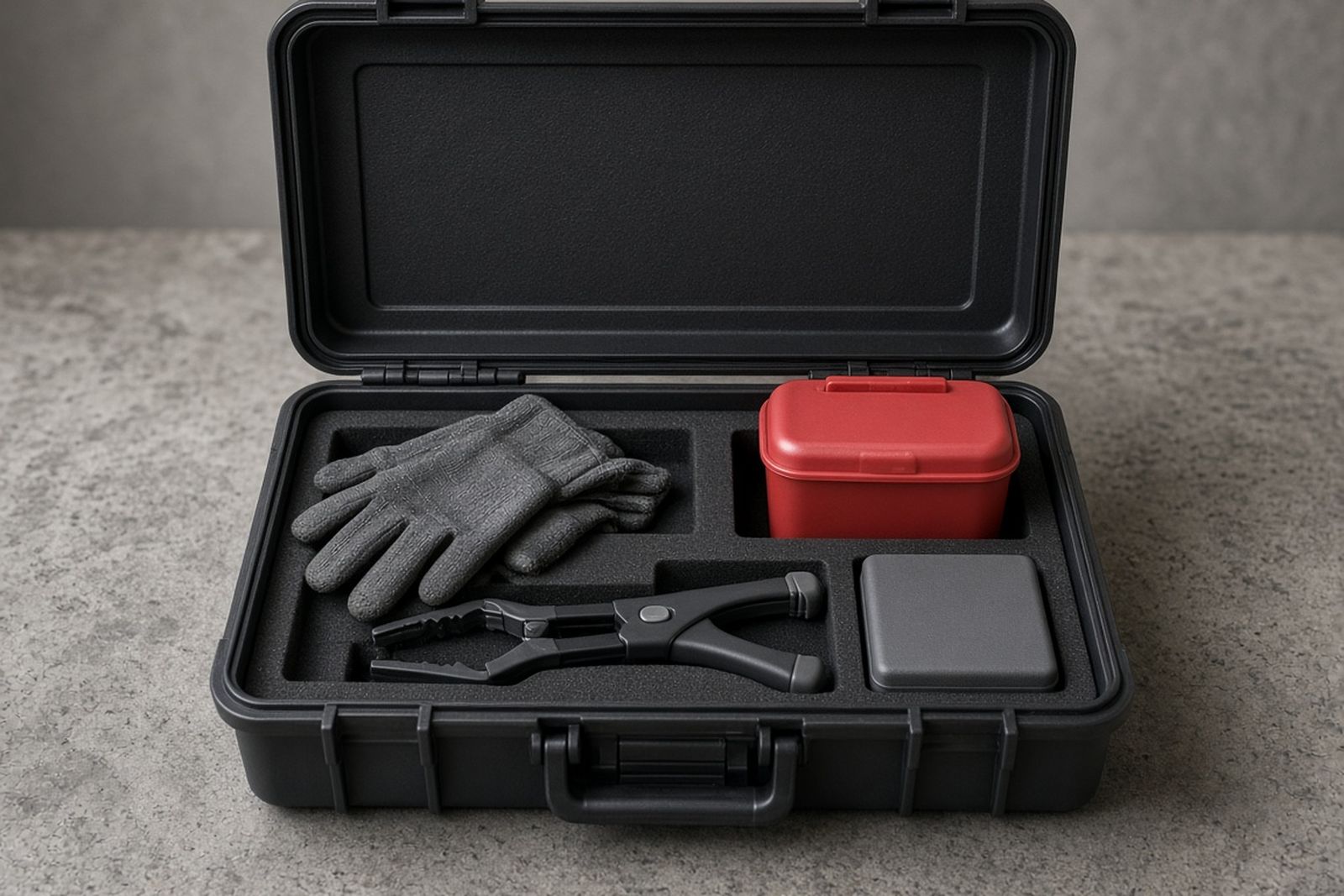
The practical lesson is simple. You cannot judge a syringe's risk by how old or dirty it looks. Every found needle is treated as potentially infectious, collected with a tool rather than fingers, and placed directly into a rigid container without recapping or breaking it.
Drug residue on household surfaces
Smoked or heated substances leave residue that settles on nearby surfaces. Powders that were cut, spilled, or handled leave fine particles in cracks, on tabletops, in carpet fibers, and on fabric. How much residue remains depends on the substance, how often it was used, how the room was ventilated, and what the surfaces are made of.
Surface type drives the chemistry of removal. Sealed, nonporous surfaces such as glazed tile, metal, glass, and laminate hold residue on top where a damp cloth and a suitable cleaner can lift it. Porous materials such as unfinished wood, drywall paper, upholstery, and carpet pad absorb residue into the material, where wiping reaches only the outer layer.
That is why a technician often talks about two separate decisions for each item: can it be cleaned, and is cleaning worth it? A glass tabletop is a quick wipe. A heavily used upholstered chair may cost more to treat than to replace, and cleaning may still leave residue deep in the foam.
Fine powders and the no-dust approach
Some powders, including fentanyl, are made of extremely small particles. Particles that small can float when disturbed and settle again somewhere else in the room.
Dry sweeping, brushing, and household vacuums are poorly suited to that behavior. A broom lifts fine dust into the air. Many consumer vacuums exhaust fine particles back out through the motor housing. Either method can move residue from one surface to many.
Professional crews reverse the approach. They lightly mist or dampen visible powder so it clumps, then wipe inward from the edges using disposable cloths. Where a vacuum is needed, they use a unit with high-efficiency filtration. They also avoid fans and forced air during this stage so particles are not blown around.
- Dampen first, then wipe; never dry sweep visible powder.
- Work from clean areas toward the contaminated spot, not the other way around.
- Fold used wipes inward and change them often so residue is not spread.
- Keep HVAC fans and portable fans off while residue is being collected.
Is it dangerous just to be near residue?
Fear of brief contact is common, and it is worth addressing calmly rather than through rumor. Being in the same room as dried residue is not the same as absorbing a dose, and the way the substance reaches the body matters far more than proximity.
Residue is not harmless, though. The realistic risks come from specific actions: stirring up powder, touching the face or food with contaminated hands, or a child putting an object in their mouth. Those are the routes a cleanup plan is designed to cut off.
For you, the right response to found residue is calm distance. Leave it alone, keep children and pets out of the room, wash your hands if you touched anything, and call a professional or local authority. If anyone shows signs of an overdose, call 911 immediately.
How disinfectants actually work
Disinfectants work by damaging the outer structures of microorganisms, but only after they have been in wet contact for long enough. Every registered product lists a contact time, sometimes called dwell time, on its label. If the surface dries before that time passes, the product may not reach its stated effect.
Organic material gets in the way. Dried blood forms a film that shields what lies beneath it and can use up the active ingredient. That is why professionals clean first and disinfect second. The cleaning step physically removes the bulk of the material; the disinfection step works on what remains.
Material compatibility matters too. Some strong disinfectants discolor fabrics, etch stone, or corrode metal. A technician chooses a product that is effective against bloodborne pathogens and safe for the surface, and follows the label for dilution, contact time, and rinsing.
A science-based cleanup, step by step
Here is how that looks in an invented case. Say you inherit a relative's small apartment and, while sorting belongings, find a shoebox under the bed holding several capped syringes, cotton balls, a scorched spoon, and a small bag with powder residue. There is also a faint brown stain on the carpet beside the bed.
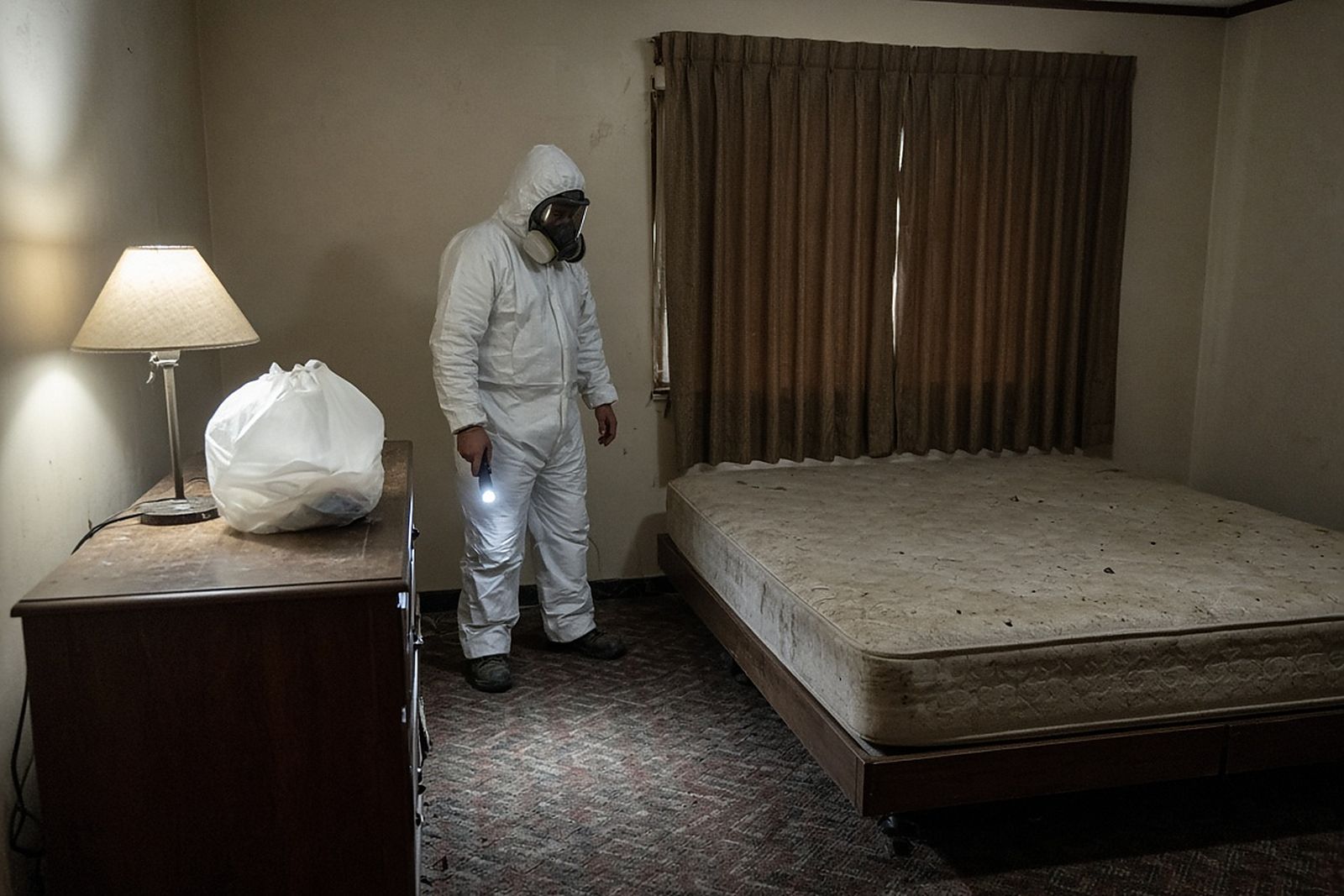
A trained crew would begin by isolating the bedroom and keeping the door closed. They would photograph the items in place for your records, then lift the shoebox as a whole into a larger lined container rather than sorting it by hand. Syringes would be transferred with tongs into a sharps container. The bag with residue would be sealed inside a second bag without being opened.
Next they would inspect the room for items tucked elsewhere, such as inside pillowcases, drawers, and coat pockets. The carpet stain would be evaluated; if it is blood, the affected section of carpet and pad might be removed rather than scrubbed. Hard surfaces near the bed would be cleaned and then disinfected with the correct contact time.
Before leaving, the crew would walk you through what they found and where it went. None of this requires you to handle anything yourself, and it gives you a clear, documented stopping point before you continue sorting the rest of the home.
Can testing confirm that a space is clean?
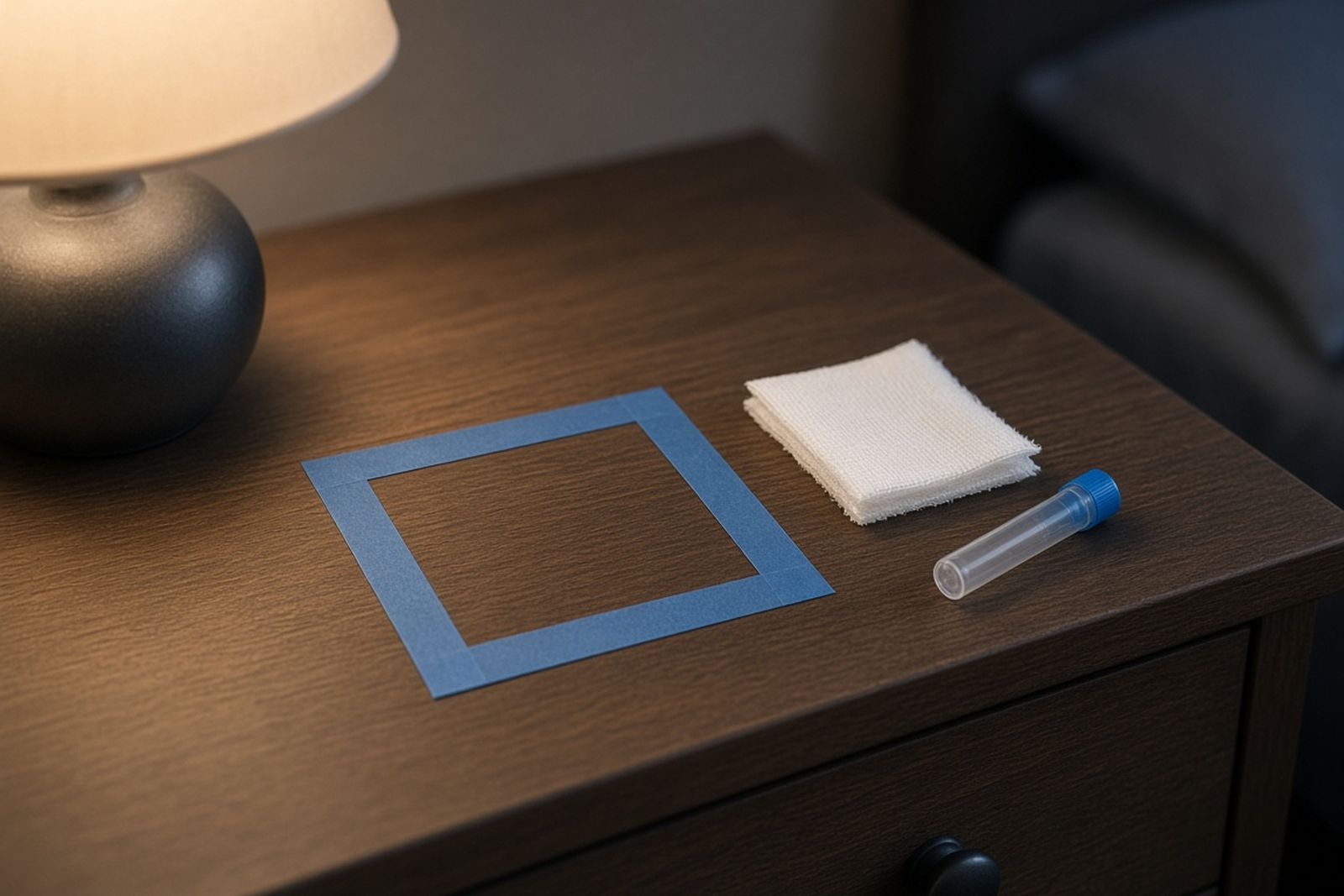
Some providers offer surface wipe sampling after cleanup, especially where powders were involved. A lab can analyze the wipes for specific drug compounds. This can offer reassurance, particularly for families with young children or for landlords preparing a unit for new tenants.
Testing has limits. Results describe only the spots that were sampled, and there is no single national standard for what counts as clean for every substance. Your state or county health department can tell you whether your situation calls for testing, which lab methods are accepted, and what result is considered acceptable.
If a provider recommends testing, ask which surfaces they plan to sample, which compounds the lab will look for, and how they will explain the results to you. A clear answer is a good sign that the recommendation is grounded in the science rather than in upselling.
Applying the science at home
You do not need a lab to use these principles. If you find paraphernalia, do not pick it up with bare hands, do not try to empty or recap syringes, and do not sweep or vacuum powder. Close off the area and call a professional cleanup provider or your local public works or health department for guidance.
If the discovery relates to someone you love, the emotional weight can be heavy. It is okay to step away and let others handle the physical work. If you or someone close to you is struggling with substance use, the SAMHSA National Helpline offers free, confidential referrals, and if there are thoughts of suicide, you can call or text 988 to reach the 988 Suicide and Crisis Lifeline.