Short answer
Drug paraphernalia cleanup often brings shock, grief, anger, guilt, and worry about safety, especially when a family member or tenant is involved. You can reduce the strain by letting professionals handle sharps and residue, setting aside personal items for later, talking honestly with the people affected, getting medical advice after any needlestick, and reaching out for support, including the 988 Lifeline during a crisis.
When the objects carry a story
Discovering syringes in a drawer, burned foil on a bathroom counter, or a glass pipe under a bed is rarely just a cleaning problem. It often reveals something painful: a loved one's addiction, a tenant's crisis, or the last months of someone who has died. The objects carry that story with them.
People respond in many ways. Some feel shock and disbelief. Others feel anger, betrayal, or deep sadness. Parents may blame themselves. Landlords may feel both frustration and unexpected concern for a tenant they barely knew. Many people feel several of these at once, and the feelings can shift from hour to hour.
None of those reactions is wrong. Giving yourself permission to feel them is an important first step, because it lets you make practical decisions without also fighting your own emotions.
You are less alone than it feels
Shame keeps many families and property owners silent. They worry about what neighbors, relatives, or other tenants will think. Yet substance use touches an enormous number of households. SAMHSA's 2023 National Survey on Drug Use and Health found that 70.5 million Americans aged 12 or older, or 24.9%, used an illicit drug in the past year, and 48.5 million had a substance use disorder.
Those numbers are a reminder that what you are facing is common, even if it feels isolating. Many of your neighbors, coworkers, and friends have lived through something similar, whether or not they talk about it.
If it feels safe to do so, consider telling one trusted person what you found. Sharing the burden, even briefly, often makes the next steps feel more manageable.
It may also help to remember that addiction is a health condition, not a verdict on anyone's character or on your parenting, friendship, or management. Holding that view does not erase your anger or hurt. It simply leaves room for compassion alongside those feelings, which many people find easier to live with over time.
Protecting your peace of mind right away
The period right after the discovery is often the most stressful. A few simple actions can restore some sense of control without requiring you to handle anything dangerous.
Focus on safety first and emotions second. You can process what the discovery means once the immediate hazard is contained.
If you are unsure whether what you found is drug-related at all, that is fine. Describe it to the cleanup company or take a photo from a safe distance. Experienced crews can usually tell you over the phone whether an item needs special handling, which spares you from guessing and from touching anything to find out.
- Keep children and pets out of the room or vehicle.
- Do not pick up syringes, sweep up powder, or handle broken pipes.
- Close the door or mark the area so no one wanders in.
- If someone may be experiencing an overdose, call 911 immediately.
- Take photos from a distance if you need them for a landlord, insurer, or cleanup company.
- Call a professional cleanup provider and describe what you found.
How do families cope when the space belonged to a loved one?
When paraphernalia is found in a family member's room, the cleanup becomes entwined with complicated emotions. If the person is alive, you may be worried about their health and unsure how to talk with them. If they have died, the discovery may add new layers to grief, including questions you cannot answer.
Overdose loss is heavy and, sadly, widespread. Behind each loss is a family, often facing a room much like the one in front of you.
It can help to let a professional crew handle the paraphernalia while you step away, then return later to sort personal belongings when you feel ready. Ask the provider to set aside letters, photos, jewelry, and other keepsakes. If grief becomes overwhelming, or you notice thoughts of harming yourself, you can call or text 988 to reach the 988 Suicide and Crisis Lifeline, which is available at any hour.
What if a child or pet may have touched something?
Few moments are more frightening than realizing a child may have handled a syringe or other paraphernalia. If a child or pet has swallowed a substance or shows drowsiness, trouble breathing, or unusual behavior, call 911. For possible ingestion without symptoms, contact Poison Control or a medical provider right away.
If a child was stuck by a discarded needle, wash the area with soap and water and seek prompt medical care. The fear can be intense, and some context may help while you wait. In a 2008 Pediatrics study of 274 children injured by discarded needles in Montreal over 19 years, there were zero HIV, hepatitis B, or hepatitis C seroconversions. That is reassuring, but it does not replace medical evaluation, which is always the right step.
Afterward, children may need reassurance too. A calm explanation that the grown-ups are handling it, and a simple rule about not touching unfamiliar objects, is often enough.
The strain on landlords and property managers
For landlords, paraphernalia cleanup often arrives alongside other stresses: lost rent, an eviction, property damage, or a tenant's death. You may be worried about liability, the next tenant's safety, and your own time.
Clear decisions ease that load. Hire a provider that documents its work so you have a record for future tenants and insurers. Set a realistic timeline for the unit to be cleaned, repaired, and ready. A real estate attorney or your local housing agency can tell you whether there are notice or disclosure requirements for your property.
It is also fine to acknowledge that the situation affected you. Many property owners feel a mix of irritation and sadness, especially if they knew the tenant was struggling. Taking a moment to recognize that can make it easier to move forward.
Consider how you will talk with neighbors or other tenants who noticed activity. A short, factual statement that the unit is being professionally cleaned and repaired usually satisfies curiosity without sharing private details about the former occupant. Discretion protects everyone involved, including you.
A sister clearing her brother's apartment
An invented example shows how this can unfold. A woman's younger brother enters residential treatment, and she agrees to clear out his apartment before the lease ends. When she opens the door, she finds syringes on the nightstand, burned spoons in the kitchen, and foil in the bathroom. She sits down on the couch and cannot move for several minutes.
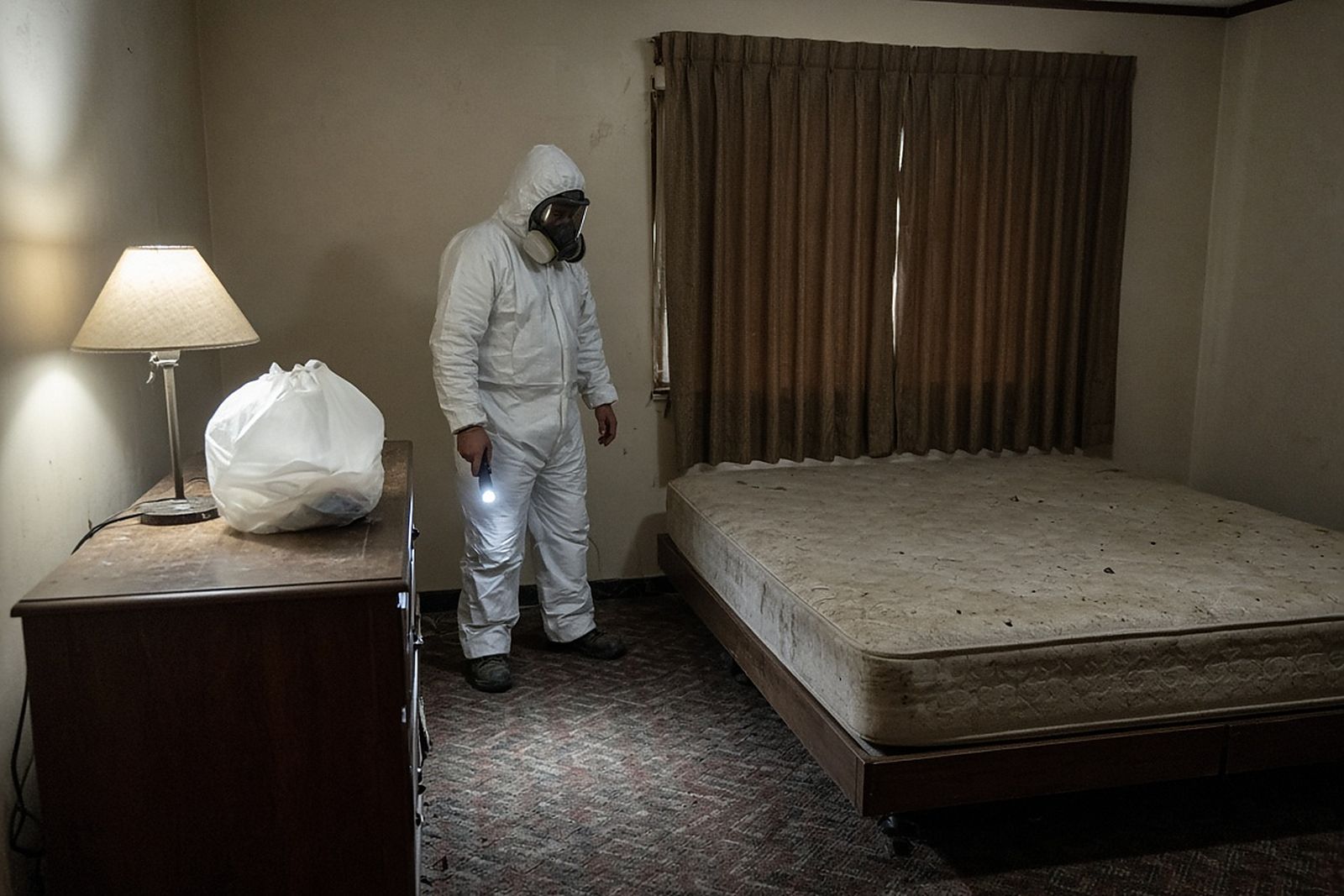
She calls a friend, then a paraphernalia cleanup company. The company schedules the work for the next morning and asks her to set aside time to walk through with the lead technician. The crew removes the sharps and paraphernalia, cleans the surfaces, and boxes personal items separately so she can decide what to keep for her brother.
That evening, she calls her brother's counselor to ask how to talk about the apartment when he is ready. She still feels sad and unsettled, but she no longer feels alone with the task, and the space that frightened her that morning now looks like an ordinary apartment again.
Why can cleanup be especially hard for someone in recovery?
Sometimes the person facing the cleanup is the one who used the space. Returning to a room where you once used drugs can bring back strong memories, cravings, or feelings of shame. That is a common and understandable challenge in recovery.
If this is you, consider letting someone else handle the paraphernalia entirely. A professional crew or a trusted supporter can clear the space while you stay elsewhere. Talk with your counselor, sponsor, or treatment team before going back, and plan who you will call if the visit feels difficult.
SAMHSA's National Helpline offers free, confidential treatment referral and information around the clock. Asking for that kind of support is a sign of strength, not weakness.
Rebuilding a sense of normal
Once the space is cleaned, some people feel immediate relief. Others find that the emotions linger. You might avoid the room, keep checking drawers, or feel sad every time you pass the door. These reactions often fade with time, especially when the space is put to new use.
Small changes help. Rearranging furniture, painting, or simply opening the windows can make a room feel different. For rental units, a fresh start with a new tenant often changes how the space feels to you as well.
If your stress stays high, or you notice problems with sleep, appetite, or mood lasting more than a few weeks, reach out to a primary care provider or counselor. You faced something difficult and handled it responsibly. Taking care of yourself afterward is part of finishing the job.