Short answer
To evaluate technology in drug paraphernalia cleanup, ask what question each tool answers, what it cannot detect, how the crew is trained to use it, and whether its results change decisions. Simple tools like sharps grabbers and rigid containers matter most. Field drug tests, handheld analyzers, and inspection cameras can help, but lab wipe sampling remains the stronger evidence for residue questions.
Why the technology question comes up
When you compare cleanup providers, some will describe their equipment in detail: handheld analyzers, inspection cameras, specialty vacuums, digital reporting apps. Others will talk mainly about their process. It is easy to assume that the provider with more gadgets does better work.
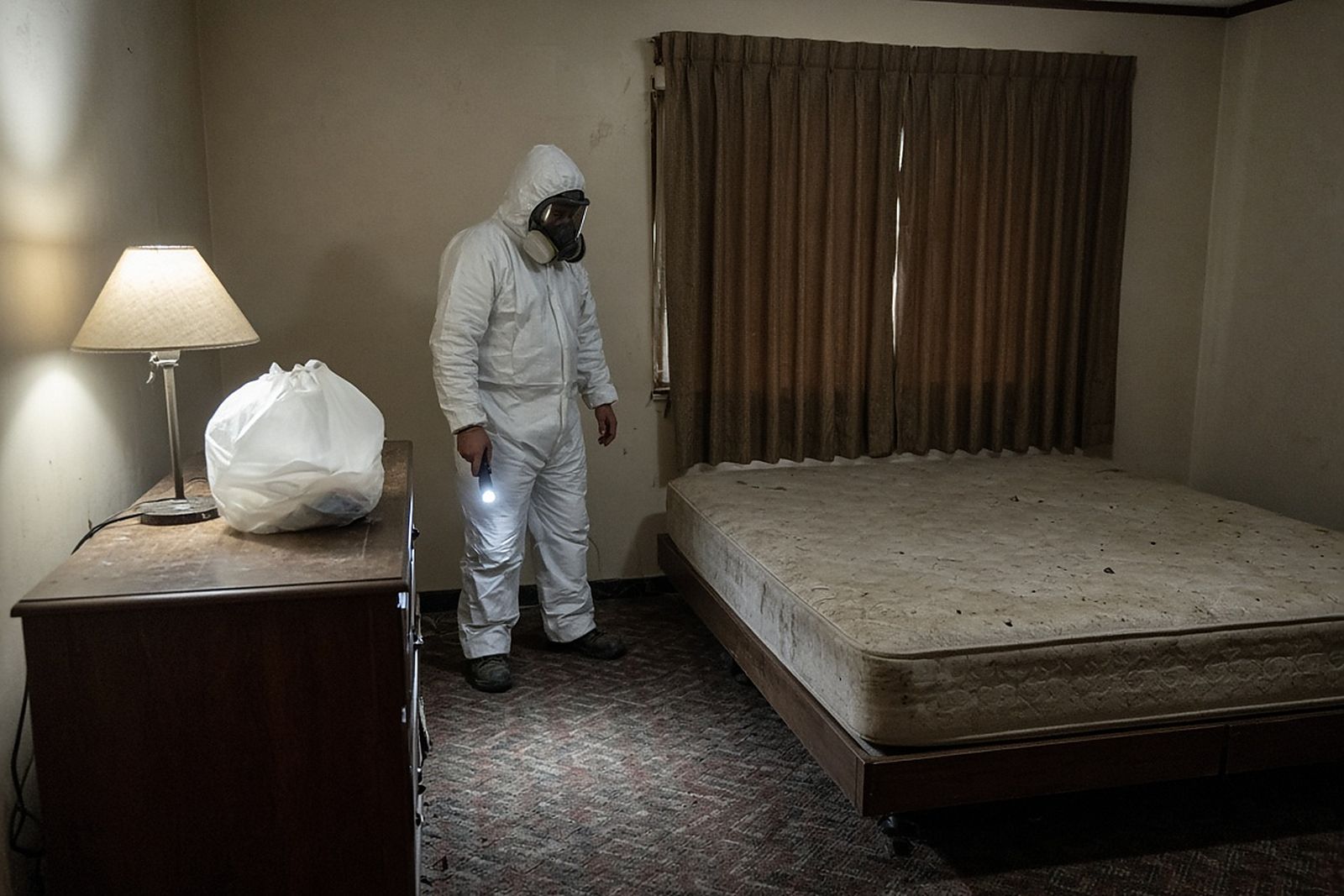
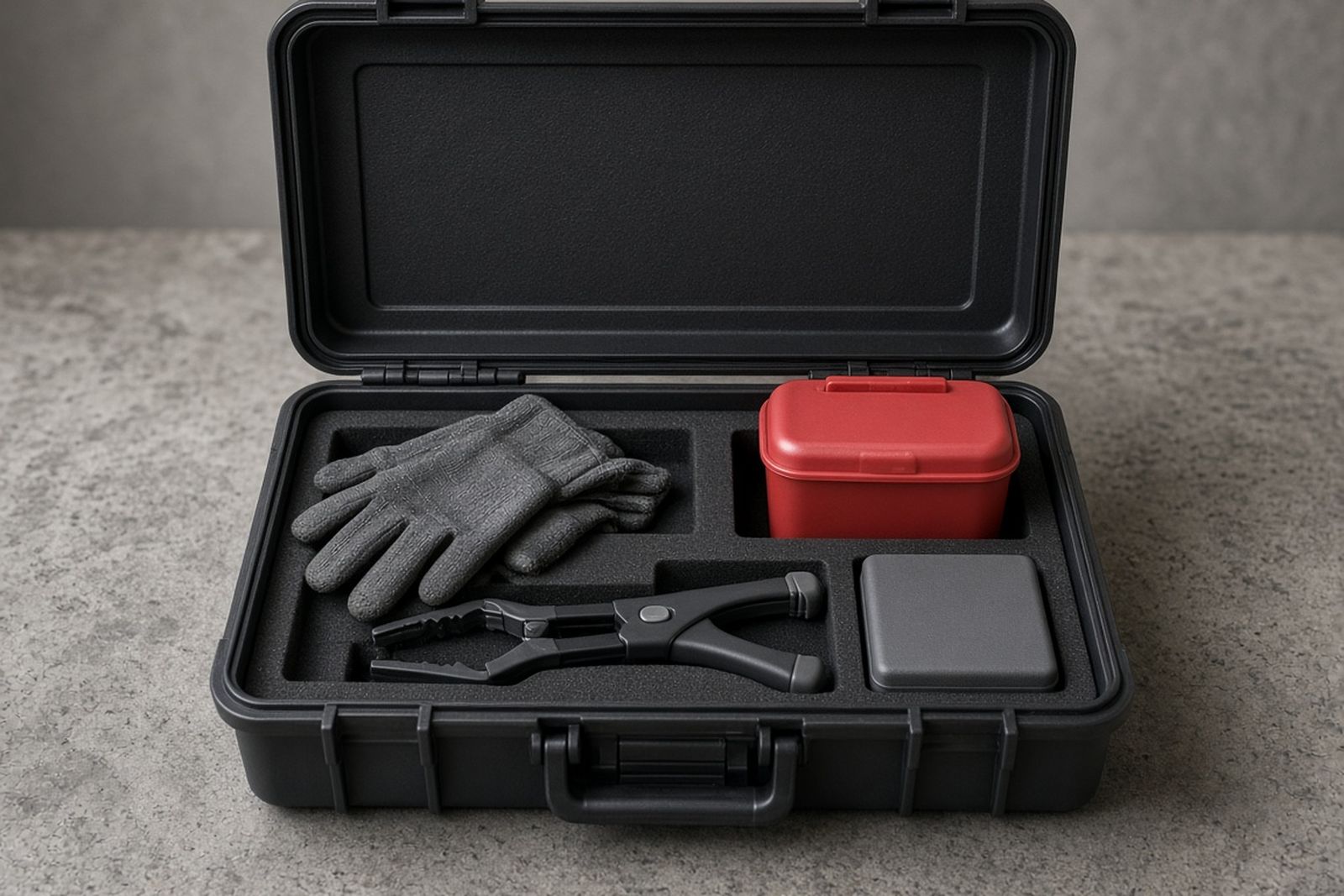
That is not always true. The most important tools in a paraphernalia job are simple: puncture-resistant containers, long-handled grabbers, good lighting, appropriate gloves and respiratory protection, disposable wipes, and sealed bags. A crew that uses these well will usually outperform a crew with expensive instruments and a careless search.
Still, some technologies do add value in the right situations. The goal of this article is to give you a way to judge them, so you can tell a useful tool from a sales prop.
Four questions for any tool
A simple framework works for nearly every piece of equipment. First, what question does this tool answer? Second, what can it not detect or do? Third, who operates it, and how were they trained? Fourth, how does the result change what the crew does next?
If a provider cannot answer the fourth question, the tool may be decorative. A reading that never alters the search, the cleaning, or the scope is not adding much to your job, however impressive the device looks.
Apply these questions calmly. You are not trying to catch anyone out. You are trying to understand what you are paying for and how much weight to put on the results you receive.
- What question does this tool answer?
- What are its blind spots?
- Who runs it, and with what training?
- How will its result change the work?
Field drug test kits and test strips
Color-change test kits and fentanyl test strips can give a quick indication of whether a substance might contain a particular drug class. For a cleanup crew, a positive result can reinforce caution, and it can help inform whether law enforcement should be contacted.
Their limits are significant. Field tests can produce false positives and false negatives, they detect only what they are designed to detect, and they do not measure how much residue is on a surface. A negative result on one sample says nothing about the rest of the room.
More importantly, a good crew treats every unknown powder as potentially dangerous whether or not a test is run. If a provider suggests that a negative field test means they can relax their precautions, that is a warning sign. Testing should add information, not remove safeguards.
Handheld spectrometers and analyzers
Some providers carry portable instruments that use infrared or Raman spectroscopy to identify substances. Law enforcement and hazmat teams use similar devices. In the right hands, they can identify a bulk powder with more confidence than a color test.
They work best on visible quantities of material, not on thin surface residue. They require training and careful interpretation, and their libraries may not include every new compound or mixture. Some are designed to read through a clear bag, which reduces handling of unknowns.
For most residential paraphernalia jobs, identifying the drug does not change the cleanup method, because unknown powders are handled cautiously anyway. Where identification matters, such as a suspected large quantity, a possible manufacturing site, or a legal question, the decision usually belongs with law enforcement or a laboratory.
Search aids: cameras, lights, and mirrors
Paraphernalia gets hidden: inside wall voids behind outlet covers, in HVAC registers, above ceiling tiles, inside hollow furniture legs, behind appliance panels. Flexible inspection cameras, sometimes called borescopes, let a technician look into these spaces without reaching in blind. That directly reduces needlestick risk.
Good lighting is a quieter but equally important aid. Headlamps and portable work lights help technicians spot caps, needles, and small bags in dim closets, under beds, and in cluttered rooms. Mirrors on extension poles serve a similar purpose for high shelves and the tops of cabinets.
These tools pass the four-question test easily: they answer where something might be hidden, their limits are obvious, they need little specialized training, and they change the search immediately by showing what to retrieve.
Filtration: HEPA vacuums and air units
Vacuums with HEPA filtration are sometimes used after the search and wet removal of powders are complete, typically on carpets and upholstery that are being kept. They should never be the first tool used on loose powder, because the suction and exhaust can move fine particles into the air before they reach the filter.
Portable air filtration units with HEPA filters can run during and after work to capture airborne particles in the room. They support, but do not replace, wet methods and respiratory protection.
Ask how the crew maintains and changes filters, and how they handle used filters as contaminated waste. A vacuum with a damaged seal or an overdue filter can do more harm than good.
Why lab wipe sampling is still the reference point
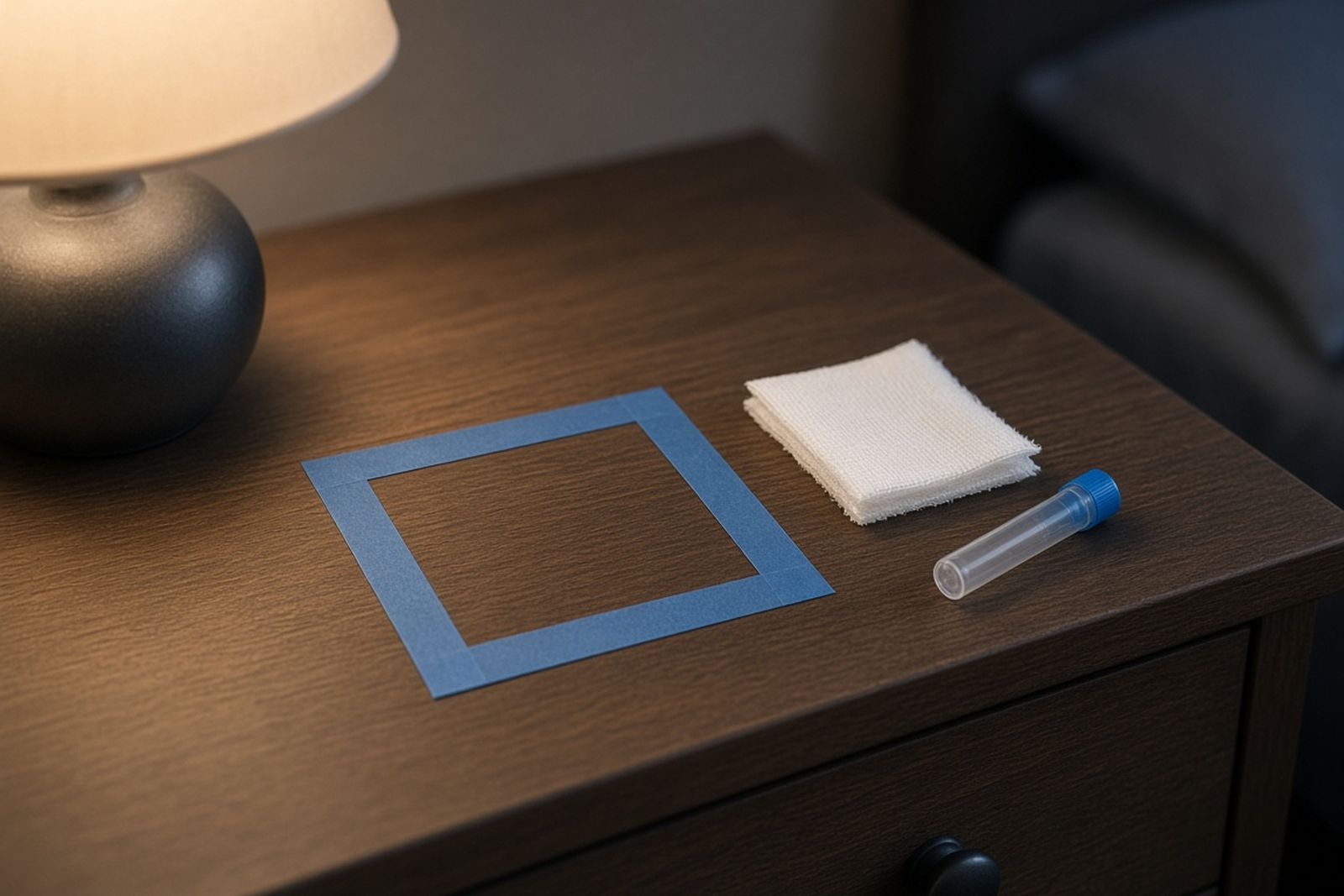
When the question is how much drug residue remains on surfaces after cleaning, lab analysis of wipe samples is the most defensible tool available to most property owners. A technician wipes a measured area, the sample travels under chain of custody, and a laboratory reports a concentration.
Research shows why surface residue deserves attention. A 2026 study by NIOSH authors across 11 forensic labs found that 8 of 86 surface wipes exceeded the ACGIH fentanyl surface limit of 10 ng per square centimeter, including on keyboards, scales, and return-air vents. Those were workplaces, not homes, but they show that residue collects on everyday touch points and in air returns.
Standards for personal-use settings are limited. According to a 2025 summary from the Legislative Analysis and Public Policy Association, California and Wyoming are the only two states whose cleanup laws or regulations name fentanyl, and neither spells out full cleanup procedures. Your state or county health department can tell you which reference values, if any, apply to your property.
Flashy toolkit vs. relevant toolkit
The four questions sort toolkits quickly. One common pitch features a handheld spectrometer, a fogging machine, and a mobile app that generates reports. Another features inspection cameras, a written search pattern, HEPA air filtration, and optional lab wipe sampling.
Run the first set through the questions and the gaps show. The spectrometer identifies powders, but the cleanup method does not change based on the result. The fogger is described as disinfecting the whole space, with no clear account of how it addresses drug residue. The app produces attractive reports, which is not the same as better work.
The second set holds up. Cameras let technicians check wall voids and vents without reaching in, air filtration runs during powder removal, and wipe sampling after cleaning gives documented results against a reference value agreed in advance. Each tool has a clear purpose and a clear effect on the work. That toolkit is less flashy and far more relevant to a paraphernalia job.
Reporting apps and digital documentation
Many providers now use software to capture photos, time stamps, sharps counts, and signatures on site. Done well, this produces a cleaner record than handwritten notes, and it makes it easier for you to share results with an insurer, an attorney, or a property management company.
Apply the same four questions. The app answers what was done, where, and when. Its blind spot is that it only records what a technician chooses to capture; a polished report cannot show a drawer that was never opened. Training matters, because inconsistent photo habits create gaps. And the result should change something: a report that flags a missed area or an open item should lead to follow-up, not just sit in your inbox.
Ask for a sample report from a previous job with identifying details removed. Look for photos taken before and after in the same locations, a clear list of items removed, a sharps count, waste records, and plain language about anything left undone. Those elements matter more than the look of the template.
Also ask how long the provider keeps records and how you can request copies later. Documentation is only useful if you can find it when a question arises months or years down the road.
How should technology fit into your final decision?
Treat technology as one factor among several. Training, search discipline, sharps handling, clear scoping, honest communication, and good documentation usually matter more than any single device.
When a provider mentions a tool, ask the four questions and listen for specific, practical answers. A crew that can explain exactly why they bring each piece of equipment, and exactly what it cannot do, is showing you the kind of thinking you want on your property.
And if the situation involves someone you love, remember that no tool addresses the human side. Support groups, treatment services, and the 988 Suicide and Crisis Lifeline, reachable by call or text, are there for the parts of this that equipment cannot touch.