Short answer
DIY cleanup may be reasonable for a few non-sharp items with no visible powder, blood, or residue, handled with gloves and sealed in a bag. Call a professional when you find needles, unknown powders, blood, heavy smoke residue, many items spread through a home, or a space where children will live. Professionals bring sharps tools, respiratory protection, dust control, testing options, and proper disposal.
Is it ever safe to clean up paraphernalia yourself?
Sometimes. Not every discovery calls for a professional crew. If you find a single glass pipe or a piece of burnt foil on a shelf, with no needles, no visible powder, and no blood, you can often handle it carefully yourself. The key is knowing where the line is and not crossing it.
Paraphernalia cleanup has two distinct hazards. One is sharps and blood, which can transmit infections through punctures or broken skin. The other is drug residue, which can be absorbed if it is inhaled, swallowed, or transferred from hands to the mouth. DIY becomes risky when either hazard is present in more than a trivial way.
This article walks through where that line falls, what professionals do differently, and how to make a safe decision for your household. Your county health department can tell you whether your area has specific requirements for reporting or disposing of certain items.
A safe DIY method for minor items
If you decide to handle a small, non-sharp item yourself, prepare before you touch anything. Put on disposable nitrile gloves. Keep children and pets out of the room. Have a sealable plastic bag ready, and a second bag to place it in.
Pick up the item without crushing or shaking it, place it in the bag, and seal it. Put that bag inside the second bag and seal it too. Wipe the surface where it sat with a damp disposable cloth and household cleaner, then bag the cloth. Remove your gloves by turning them inside out and bag them as well. Finish by scrubbing your hands with soap and warm water.
Ask your local health department or police non-emergency line how to dispose of the sealed bag. In some areas, it can go in household trash; in others, there are drop-off options. If you are unsure what the item is or what it might contain, stop and call a professional instead.
- Wear disposable nitrile gloves and keep others out of the room.
- Bag the item without crushing it, then double-bag.
- Wipe the spot with a damp disposable cloth and bag the cloth.
- Remove gloves inside out, bag them, and wash your hands well.
When needles change the decision
Needles are the clearest signal to stop. Even a single syringe can carry blood inside the barrel or hub, and hidden needles are easy to miss. Many accidental sticks happen when people reach into a bag, drawer, or pocket without looking, or try to recap a needle to make it safer.
The good news is that infections from community needlesticks are uncommon. A 2008 study in Pediatrics followed 274 children injured by discarded needles in Montreal over 19 years and found zero HIV, hepatitis B, or hepatitis C seroconversions. That is reassuring, but it does not make needles safe to handle. Each stick still means worry, testing, and sometimes preventive medication.
The same Montreal study found that 64.6% of injured children had purposely picked up the needle, and their mean age was 7.9 years. Children are curious, and a found syringe looks like a toy. If you have kids in your home, needles are a strong reason to bring in a professional who will also search for items you have not found yet.
If you are ever stuck, wash the wound with soap and water, let it bleed freely, and seek medical care promptly.
Unknown powder belongs to professionals
Powder residue is the second clear stopping point. You cannot tell by looking what a powder contains, and some substances are potent in small amounts. Disturbing powder by sweeping, vacuuming, or wiping it dry can send fine particles into the air or spread them across surfaces.
Professionals approach powder with protective gear, including respiratory protection chosen for the hazard, and with a no-dust method: dampening powder before wiping, working from clean areas toward contaminated ones, and using HEPA-filtered vacuums only after visible residue is removed.
They may also offer testing. Washington State's Department of Health, in a 2024 guide on drug residue in vehicles, advises hiring a decontamination contractor if fentanyl residue exceeds the ACGIH surface limit of 1 µg per 100 cm2. You cannot measure that at home, which is one more reason to let a trained crew assess the situation.
If you find powder, leave it alone, keep everyone away, wash your hands if you touched anything, and call for help. If anyone shows signs of overdose, call 911 immediately.
Blood, smoke residue, and soft materials
Blood on carpet, bedding, upholstery, or walls needs more than a household cleaner. It should be cleaned and then disinfected with a product registered for bloodborne pathogens, left wet for the full contact time on the label. Soft materials that absorbed blood often need to be removed rather than cleaned.
Heavy smoke residue from repeated drug use can coat walls, ceilings, and furnishings. Cleaning it well requires repeated passes, attention to porous materials, and sometimes sealing or repainting. Household cleaning often leaves residue behind in the texture of walls and fabrics.
In both cases, a professional can judge which items are worth cleaning and which should be discarded, and can handle removal and disposal safely.
What professionals do that you cannot
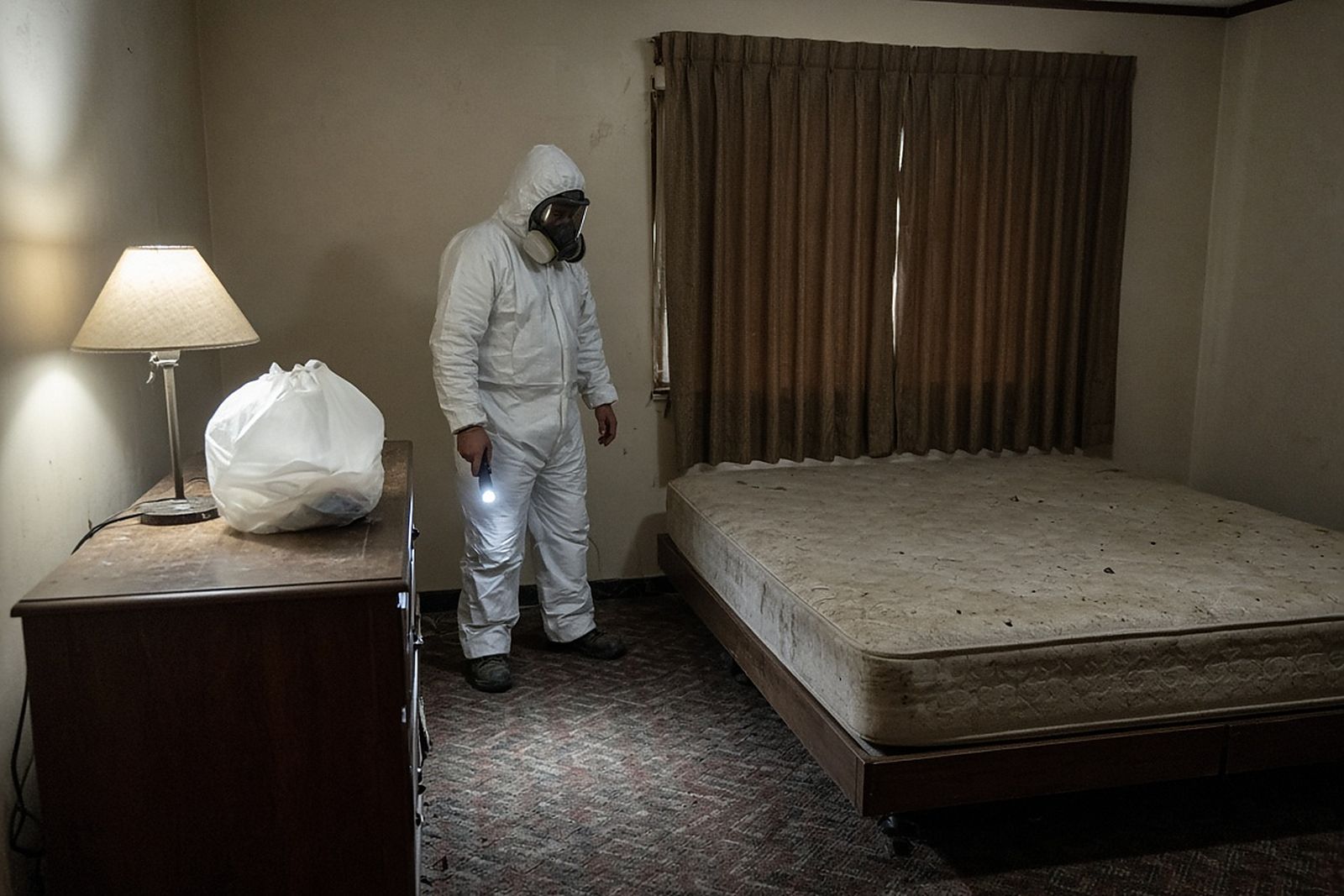
The biggest difference is the search. Professionals are trained to look for hidden items in places most people would not think to check: inside mattresses and box springs, behind outlet covers, in ceiling tiles, inside toilet tanks, in coat linings, and in vents. They use tools and lighting so they never have to reach in blindly.
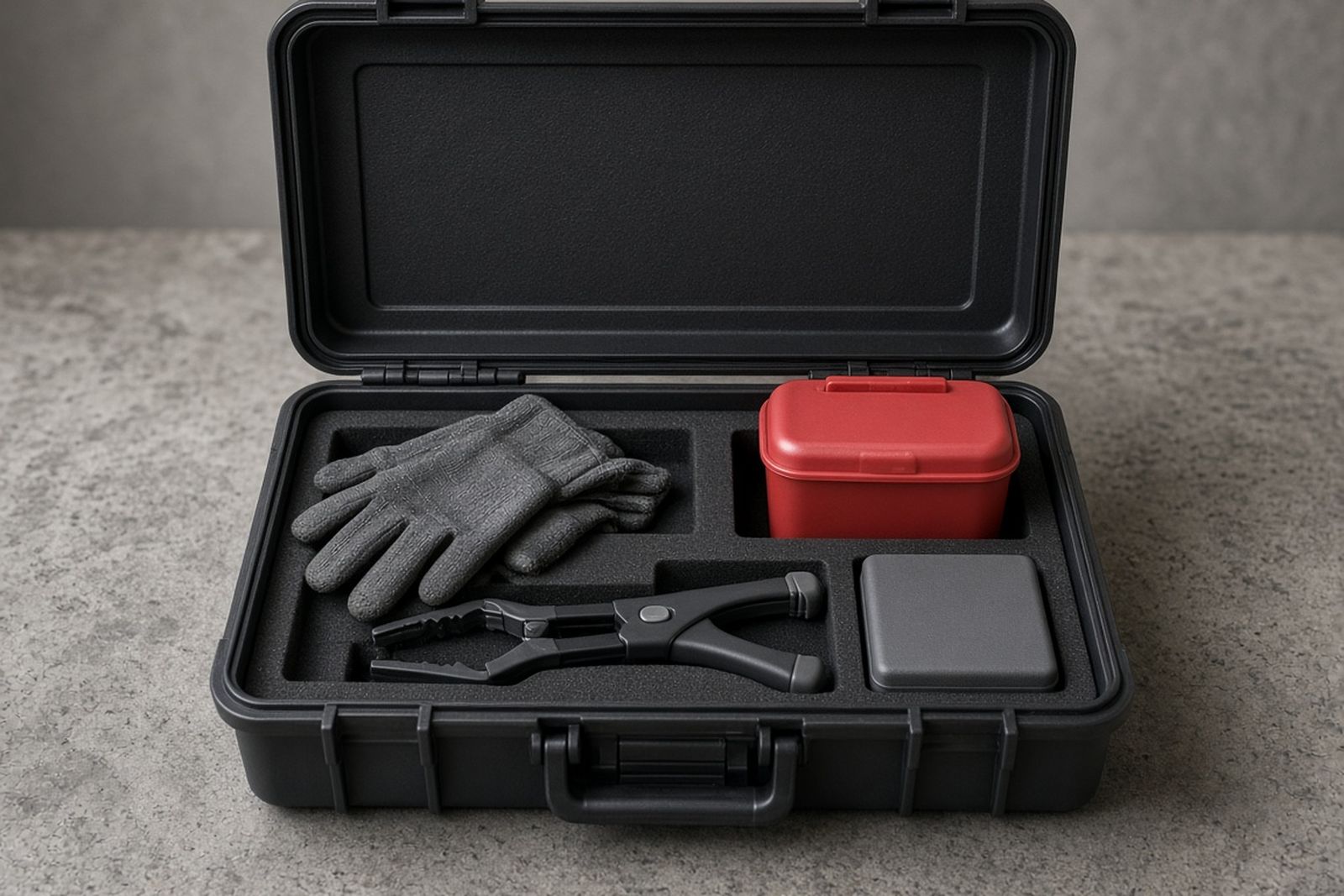
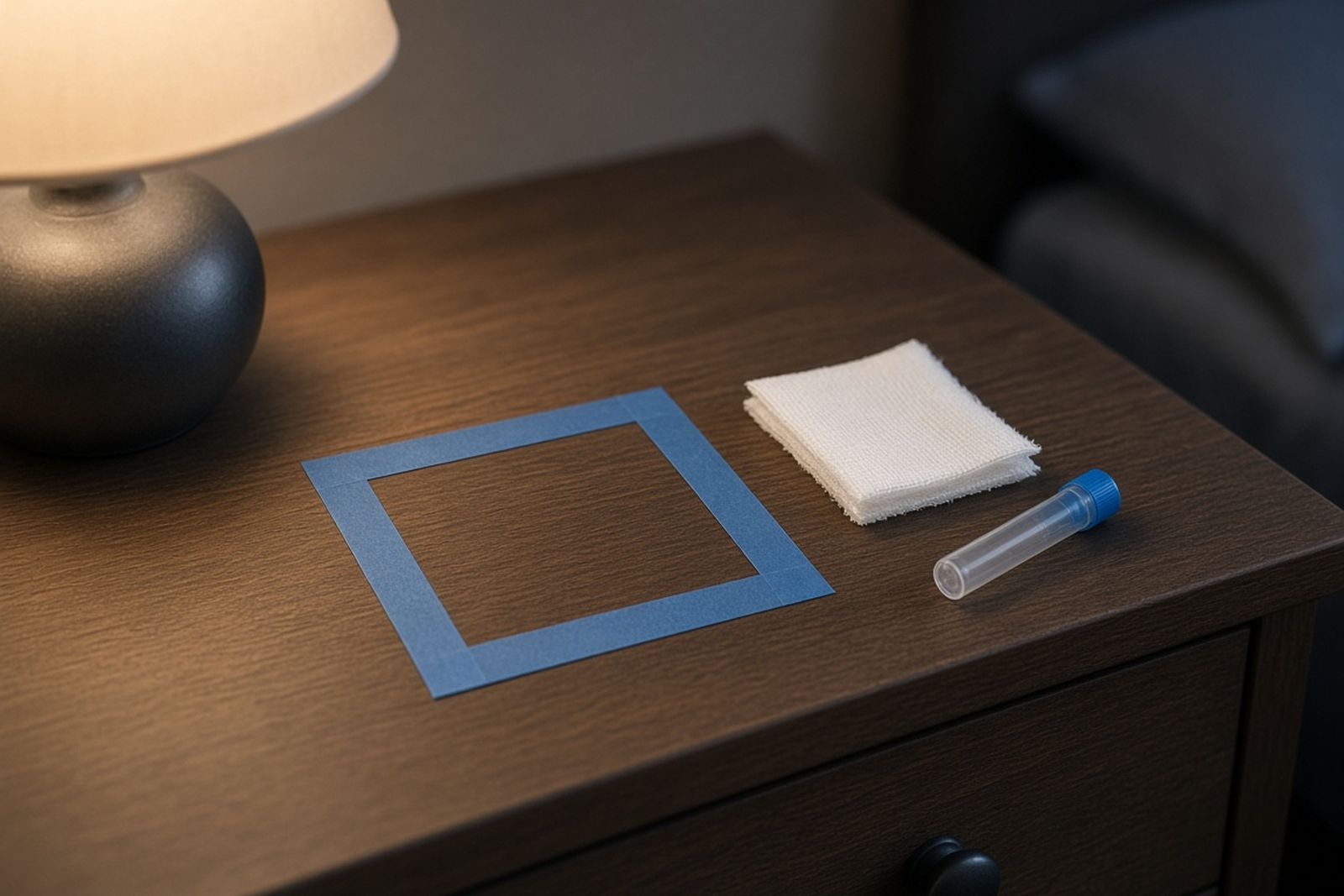
They also bring equipment you probably do not have: no-touch grabbers, rigid sharps containers, respirators, disposable coveralls, HEPA vacuums, registered disinfectants, and wipe sampling kits. They know how to put on and remove gear without contaminating themselves.
Finally, they handle disposal. Sharps go to facilities that treat medical waste. Other items are packaged according to local rules. You receive documentation of what was found and how it was handled, which is valuable for landlords, property managers, and families settling an estate.
Three ways a DIY cleanup goes too far
The most common mistake is momentum. Someone starts with one harmless item, feels confident, and keeps going into drawers, bags, and closets without stopping to reassess. That is often when a hidden needle or an open bag of powder turns up, and by then hands are already in the wrong place.
The second is using the wrong tools. A household vacuum run over carpet with residue can push particles into the air and contaminate the machine itself. A broom spreads powder into floor seams. Throwing loose syringes into a kitchen trash bag puts sanitation workers, and anyone who carries the bag to the curb, at risk.
The third is doing the job alone and without documentation. If you are a landlord, a tenant, or an executor, you may later need to show what was found and how it was handled. A professional record answers those questions. A trash bag in a dumpster does not.
How the decision might play out at home
Here is an illustrative example rather than a real case. Your adult son has moved out of the family home after starting treatment, and you are cleaning his old room. On the desk you find a glass pipe and a lighter. In the closet, you find a backpack.
Here, the pipe on the desk, with no visible powder around it, is the kind of item you might bag yourself with gloves. The backpack is different. You do not know what is inside, and reaching in could mean a needle stick. The right move would be to leave the backpack where it is, close the closet, and call a professional.
The crew would open the backpack with tools, find two syringes and a small bag of residue, and package them properly. They would then search the rest of the room, including the mattress, drawers, and vents, and clean surfaces where residue might have settled. You would get a clear report and a room you can safely use again.
Situations like this carry emotional weight. It is okay to let someone else handle the physical work while you focus on supporting your family.
A quick decision checklist
A simple set of questions can guide you. If the answer to any of them is yes, call a professional.
If you are unsure, call anyway. Most providers will talk through what you found and tell you whether you need a visit. And if the discovery involves someone struggling with substance use, the SAMHSA National Helpline offers free, confidential support. If anyone is in crisis or thinking about suicide, call or text 988 to reach the 988 Suicide and Crisis Lifeline.
- Is there a needle, syringe, or any other sharp object?
- Is there powder, crystals, or residue you cannot identify?
- Is there blood on surfaces, bedding, or furniture?
- Are there many items or signs of use across several rooms?
- Will children, older adults, or pets use the space?
- Do you need documentation for a landlord, insurer, or estate?